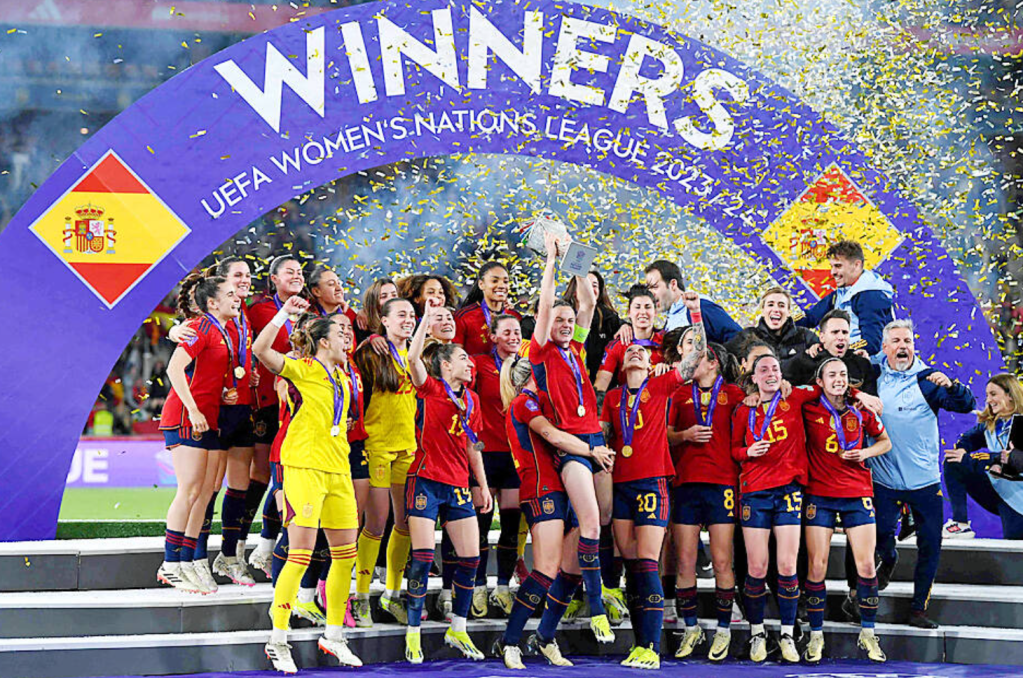
Over the last 11 months, the dominant performances of the Spanish Women’s National Team have led to the side becoming champions of the World as well as the Champions of the Nations League. Not only has the side triumphed in their last two tournaments, but they have done so playing truly entertaining football, with Aitana Bonmatí, Mariona Cladentey and Olga Carmona, standouts in possession. From a personal perspective, my fascination with the side has coincided with thoughts I have had on the role of tactical analysis for coaches. The conclusion that I have reached is that when analysing the tactics of a team, you are bearing witness to the result of their training process. What a team does (or doesn’t) do on the training ground will affect their ability to solve problems presented by the opposition and impose problems onto the opposition.
Therefore this analysis of the Spanish Women’s National team will be divided into two separate articles. The first will primarily discuss how the team look to act in order to progress the ball forward as well as their actions in the final third and the second shall look to discuss how these actions and principles can be introduced in a training environment.
Spain’s principles in Possession.
Despite the change of head coach after last year’s World Cup, a large part of the principles underpinning Spain’s actions have remained similar, thus examples from the World Cup will be used. On paper, Spain have consistently lined up in a 4-3-3 as seen below.
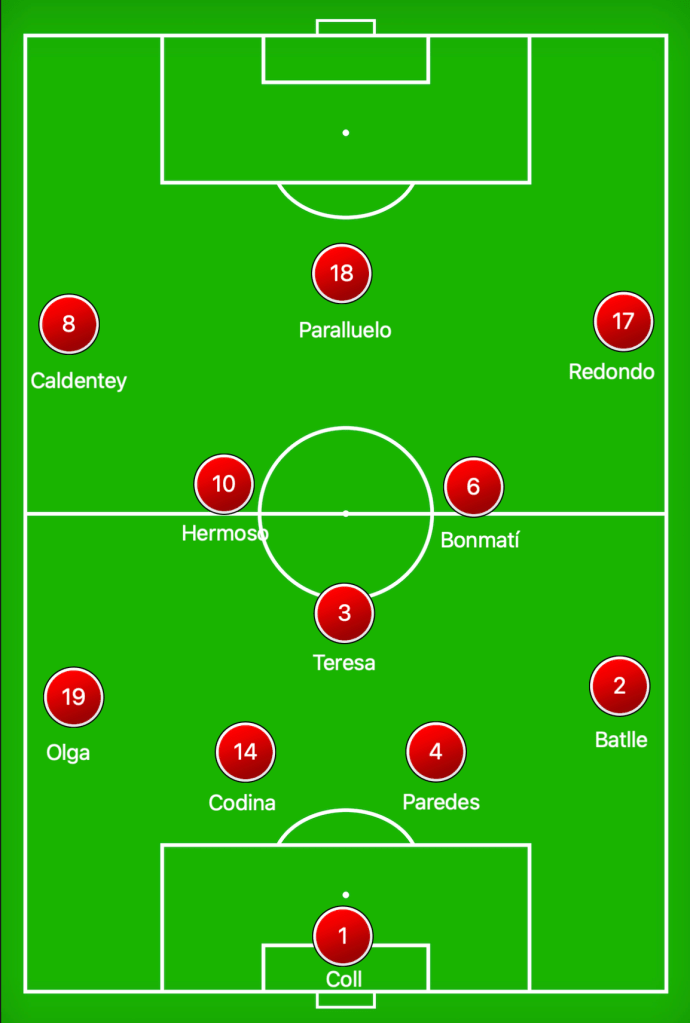
In practice, Spain’s structure with the ball does not deviate too much away from this. Spain look to keep their back four shape in the initial stages of build-up. In certain matches, particularly in the world cup, Spain often used their full-backs, particularly the left full-back Olga Carmona in the initial stage of build up. The Spanish first-choice full-backs of Olga Carmona and Ona Battle both possess an excellent first touch, with both players very calm on the ball and capable of playing successful one-touch passes even in tight spaces. Carmona’s agility and speed on the ball allow her to either drive past defenders or meander between them.
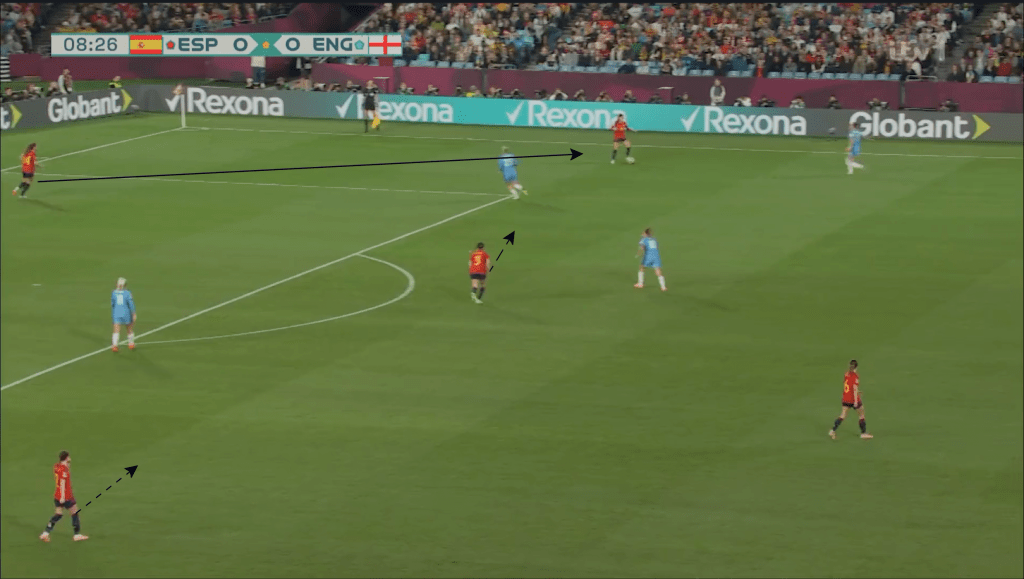
Generally, as seen above, as the ball is played out to Carmona on the left, the opposite full-back, Battle, looks to move centrally instead of staying on the touchline, which shortens the distance that the ball has to travel after the switch in play, potentially allowing Battle to dribble into spaces left by the opposition quicker.
In the midfield, Spain look to have 4 players in central areas, with Cladentey, the left winger, having the freedom to invert further into midfield, with Jenni Hermoso also having the license to enter space in different areas in the centre of the pitch. This may potentially create a 4v3 for Spain in the midfield against the opposition. Aitana Bonmatí who usually plays on the right-hand side of the midfield 3 also occasionally drifts to the left-hand-side. Nevertheless, Cladentey and Hermoso are primarily given the license to roam in order to find space, with the two players particularly looking to position themselves in the spaces between the opposition lines of defence. Thus, primarily in the first two-thirds of the pitch, Spain play vertical and diagonal passes, particularly to Caldentey as well as Hermoso with the player receiving the pass then looking to play the ball to the opposite flank.
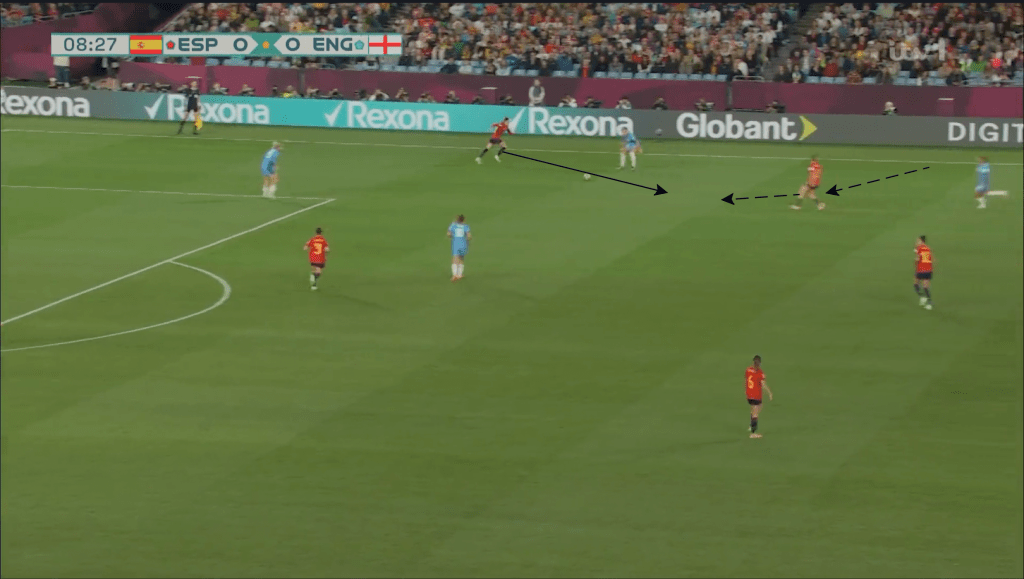
Often after receiving the ball in such positions, Cladentey will then look to switch play to the opposite side, as stated previously. However, it must be stated that although Spain often look to switch possession to the opposite flank in these instances, they may also look to continue progressing the ball down the same flank but this is a rare occurrence. Caldentey’s strengths as a player allow her to receive such passes due to her physical strength, which allows her to hold off defenders as well as her great first touch and exceptional close control when dribbling. Thus it can be said that Spain have a focus on playing vertical/diagonal passes to Cladentey and Hermoso, before switching the ball to the opposite side, with the side then looking to attack the last line of opposition defence as quickly as possible, with this being a main pillar in their methods of ball progression and chance creation.
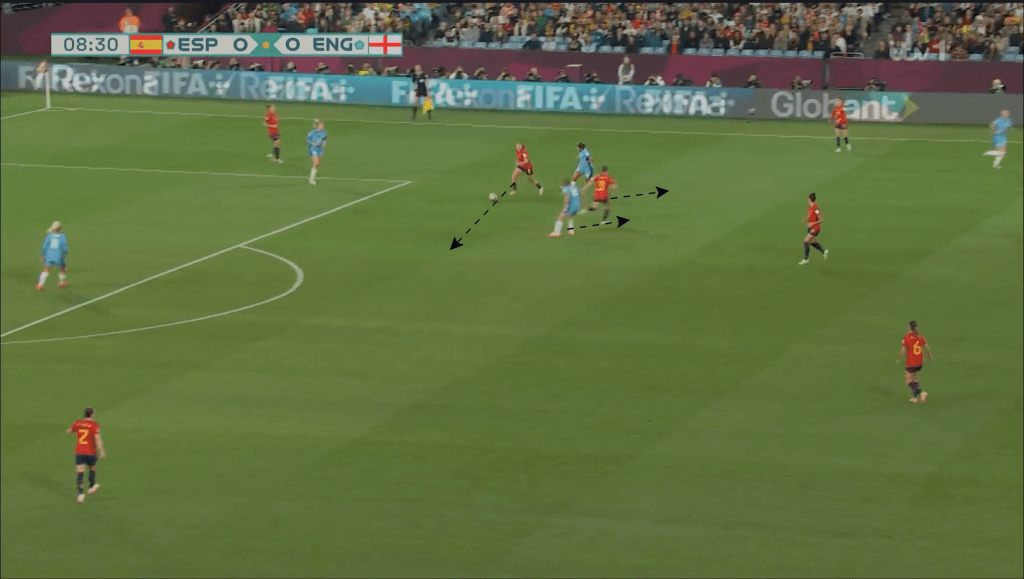
On the right hand side, Bonmatí, Ona Battle as well as Athenea del Castillo (when she plays) excel in carrying the ball forward very quickly which enables Spain to attack the last line of opposition defence with great speed.
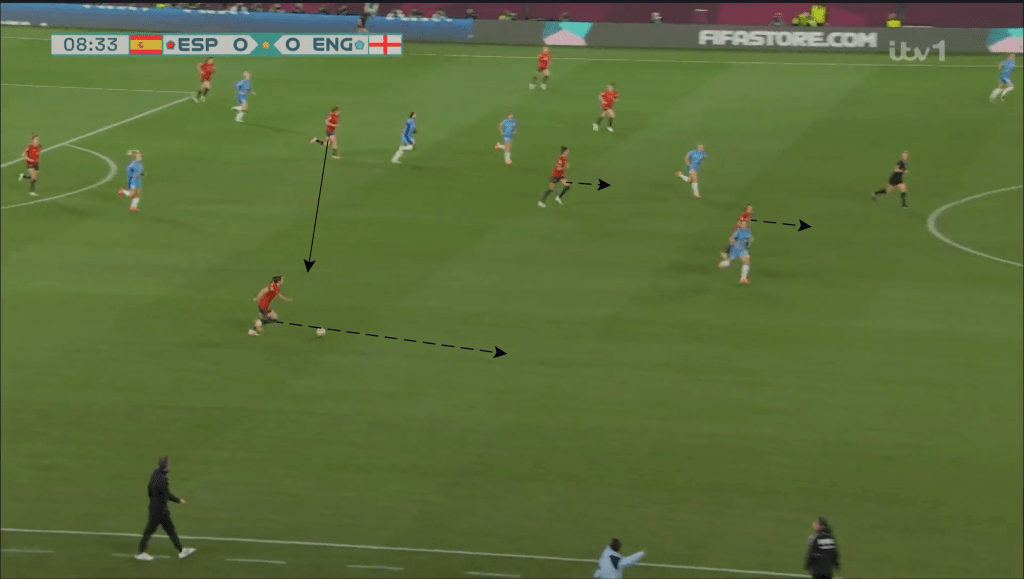
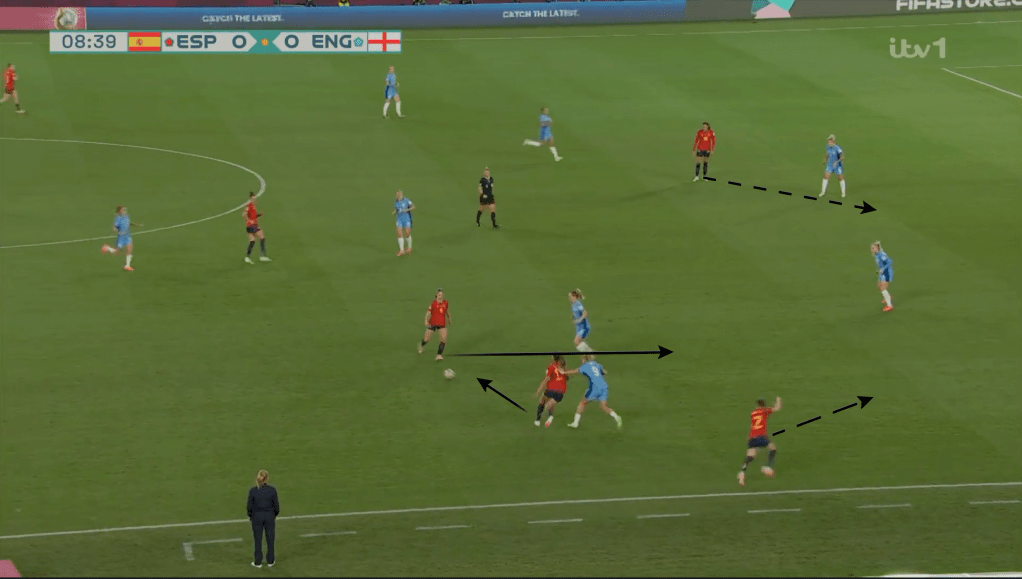
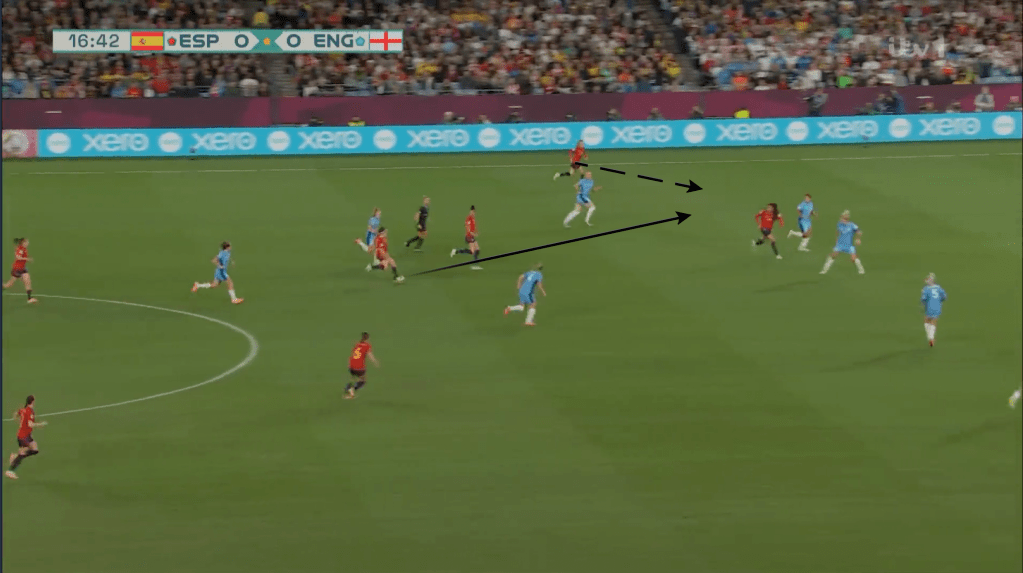
After possession is switched to the right side and Spain look to attack the last line of defence with speed, either Bonamtí, the right central midfielder, or Salma Paralluelo the striker look to make runs behind the last line of the opposition defence. As can be seen in the image below, after a similar pattern where the ball is switched to the right side of the pitch, Spain then advance further up the pitch, with Salma Paralluelo beginning to make a diagonal run behind England’s last line.
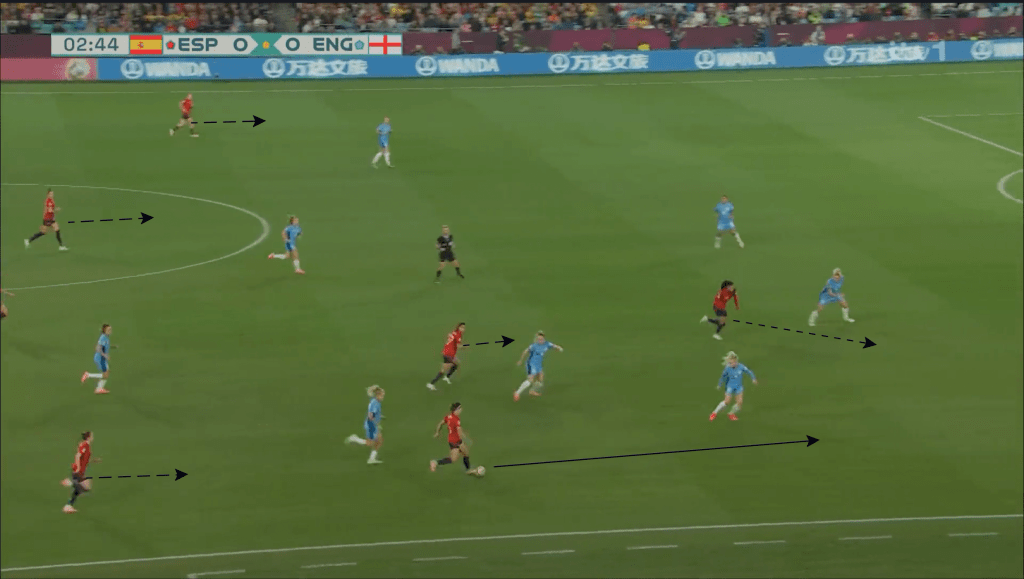
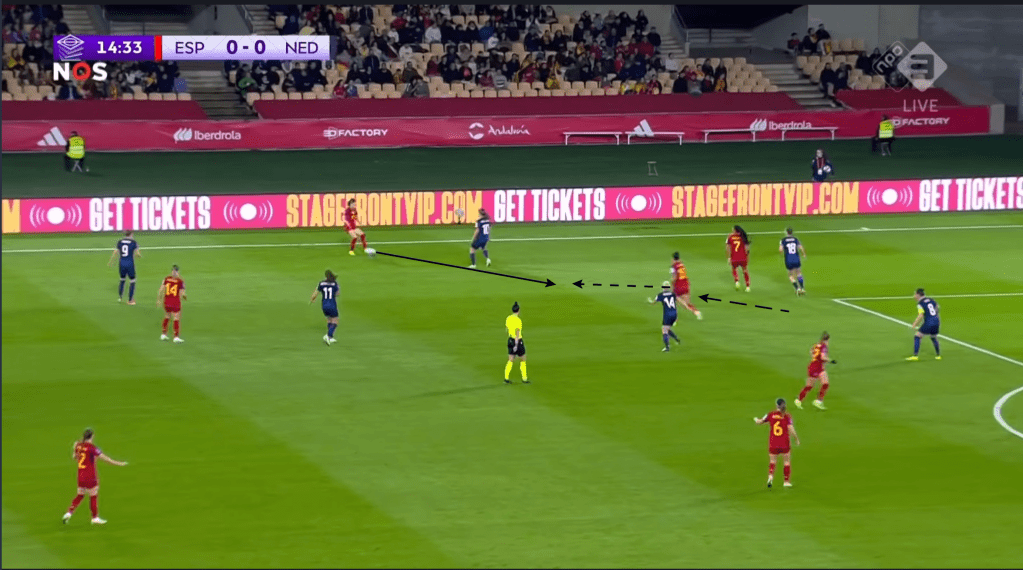
The image below shows another example of similar actions from Spain in build-up, however, this time in a Nations League game. After receiving the ball Caldentey would then play the ball to the opposite side.
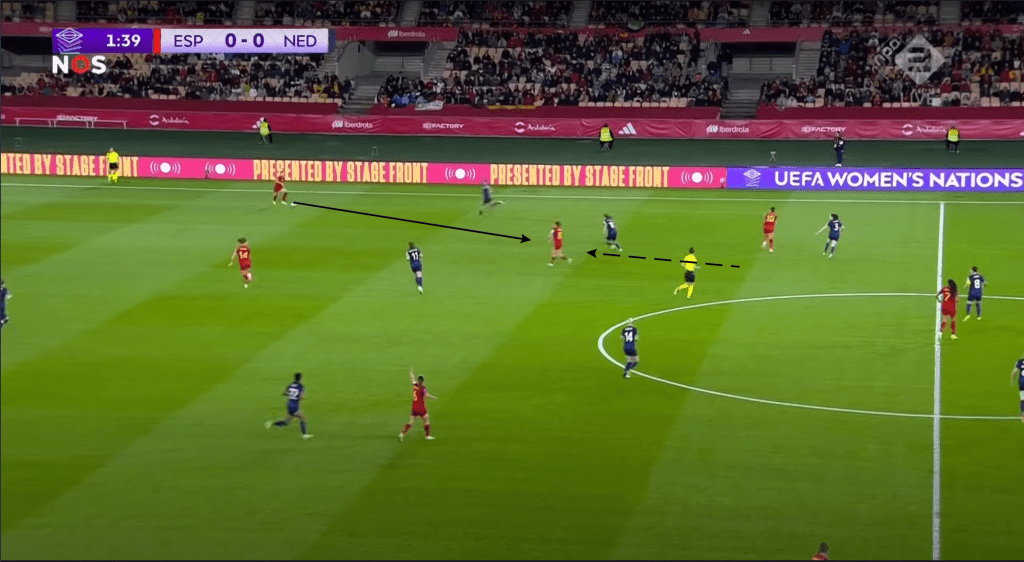
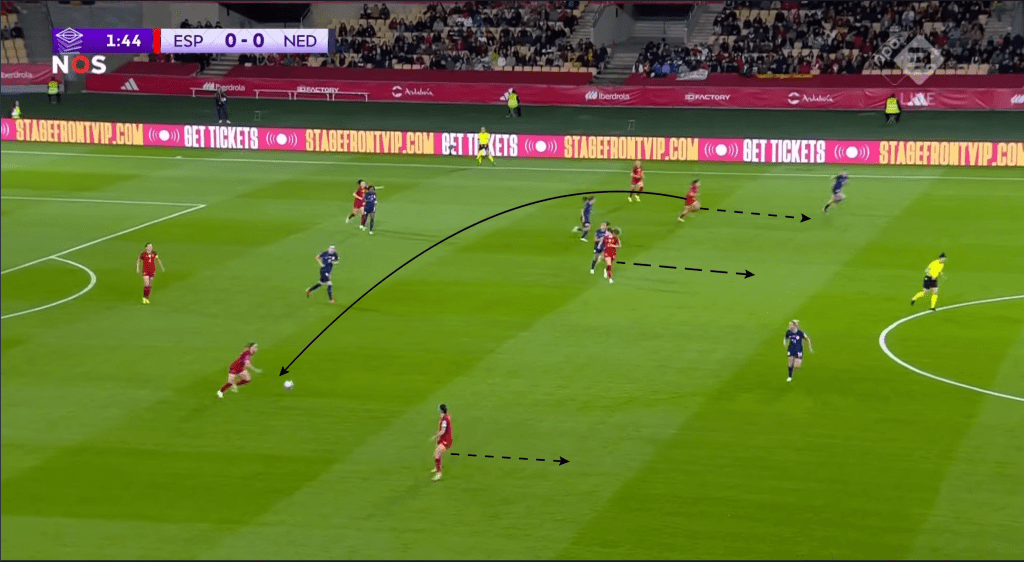
As Batlle advances with the ball, Paralluelo can once again be seen making a diagonal run behind the opposition’s last line of defence.
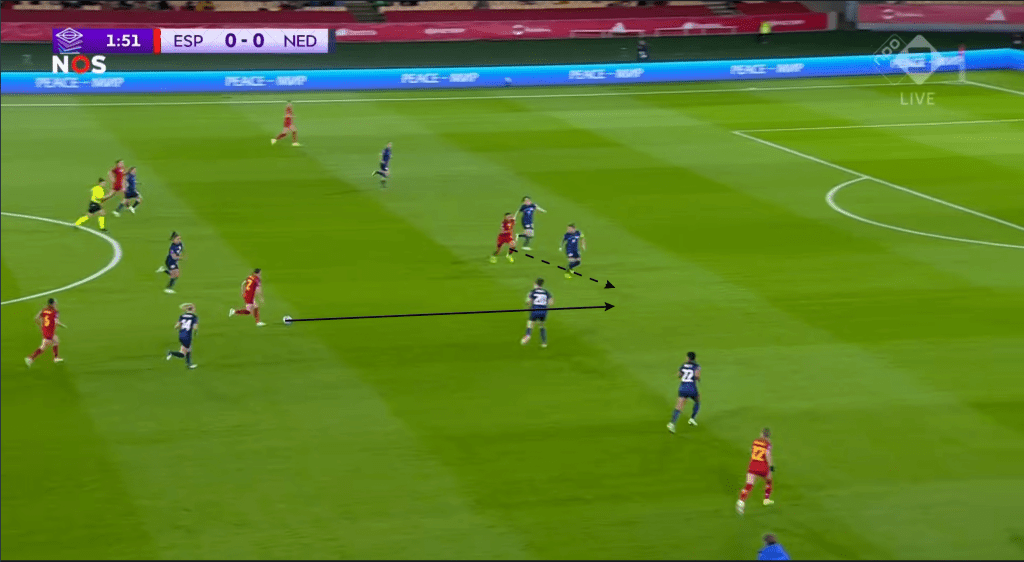
As stated previously, Spain look to attack the last line as quickly as possible, thus in certain instances, rather than dribbling forwards with the ball after the switch in possession, the player receiving the switched pass may play a long ball immediately after receiving the ball.
A).
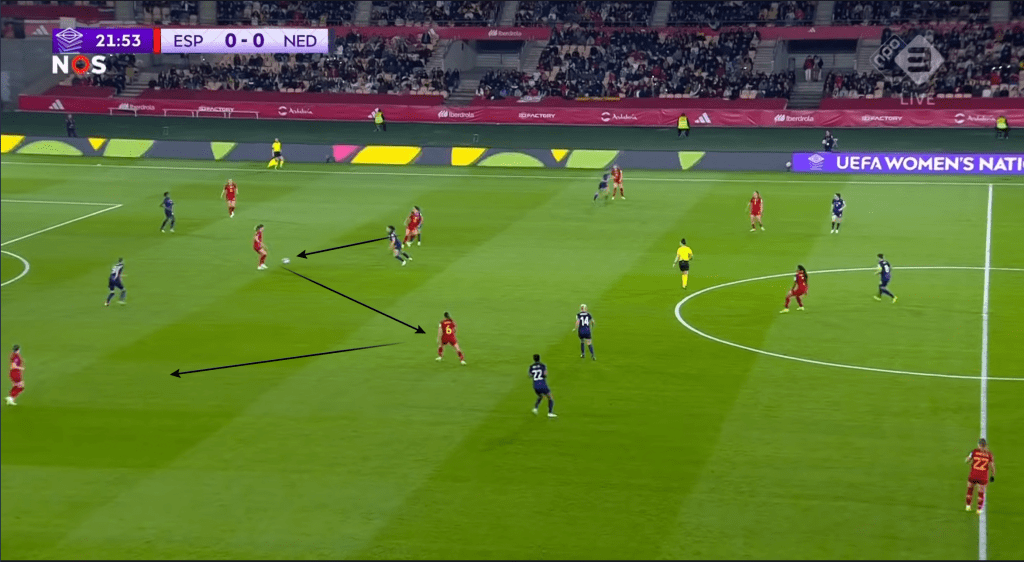
B).

C).
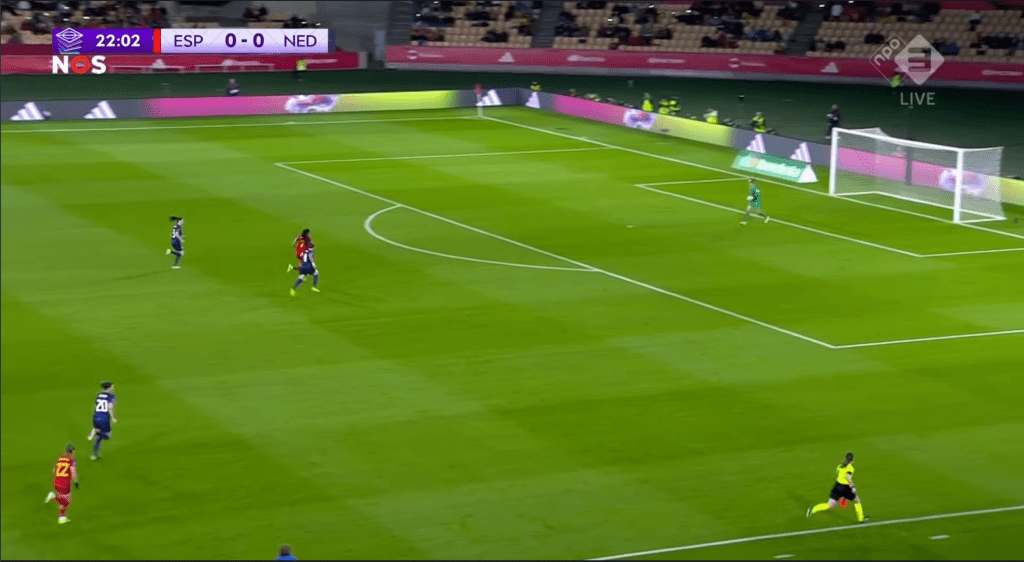
Bonmati may also make similar runs behind the last line of defence after a switch in possession. The image below once again shows Cladentey receiving a vertical pass from Codina.
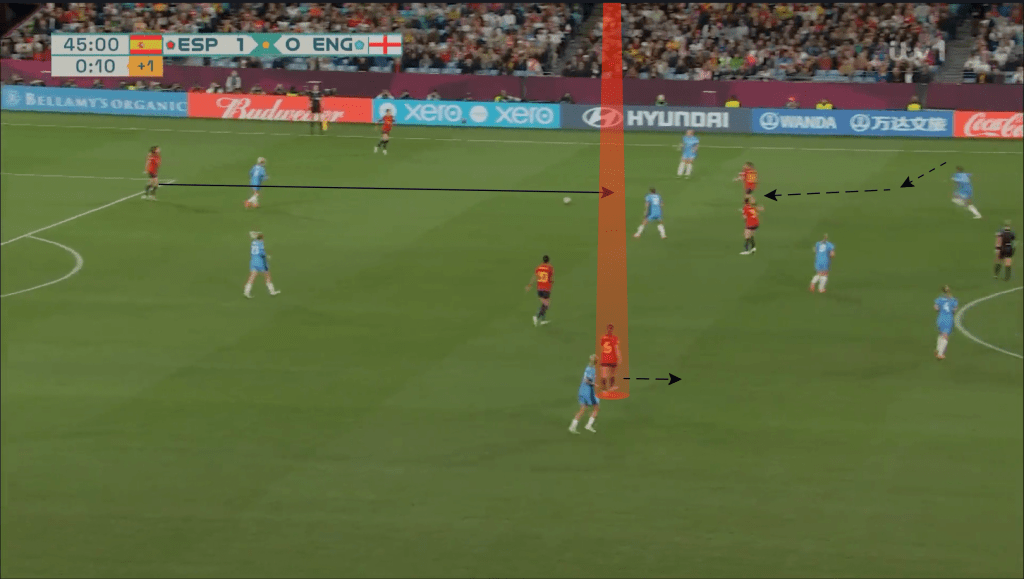
Caldentey then drives further into the middle of the pitch before playing a pass to Hermoso who would then play a pass to Batlle
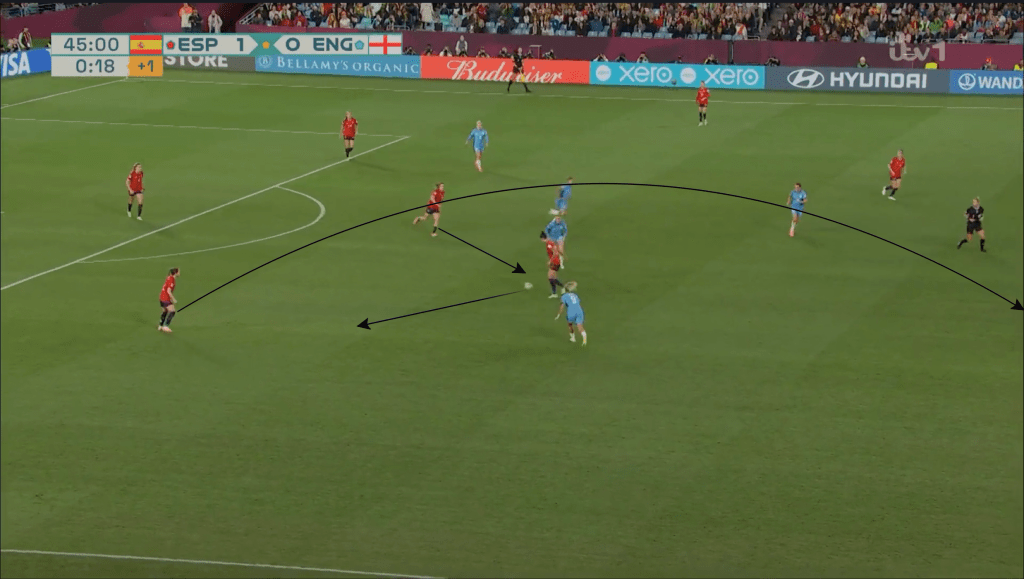
Battle would then play a long ball to Bonmatí.

Although there have been occasions where Spain have initially played the ball towards their right-hand side, before switching the ball to the left-hand side, Spain generally look to take advantage of the speed of their players on the right-hand side of the pitch to exploit spaces left by the opposition.
However, vertical passes followed by a switch in play is not the only method Spain utilise to progress the ball, with the side also capable of playing long elevated passes to Hermoso and Cladentey, as well as passes over the opposition back line to Paralluelo. With long passes to Caldentey and Hermoso, Spain look to take advantage of Hermoso’s height as well as Cladentey’s first touch, with both players positioned in close proximity with one another after such a ball is played in order to win second balls. An example of this can be seen in the image below.
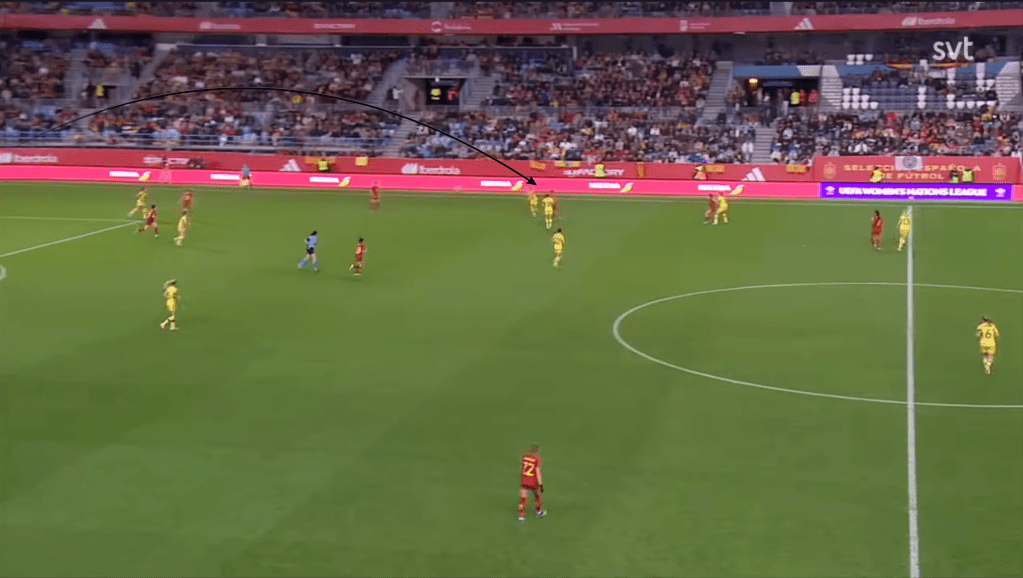
After such a pass is played, the two aforementioned players will often look to win the first or second ball and then play a pass forwards to Paralluelo in order to exploit spaces in the opposition back-line.
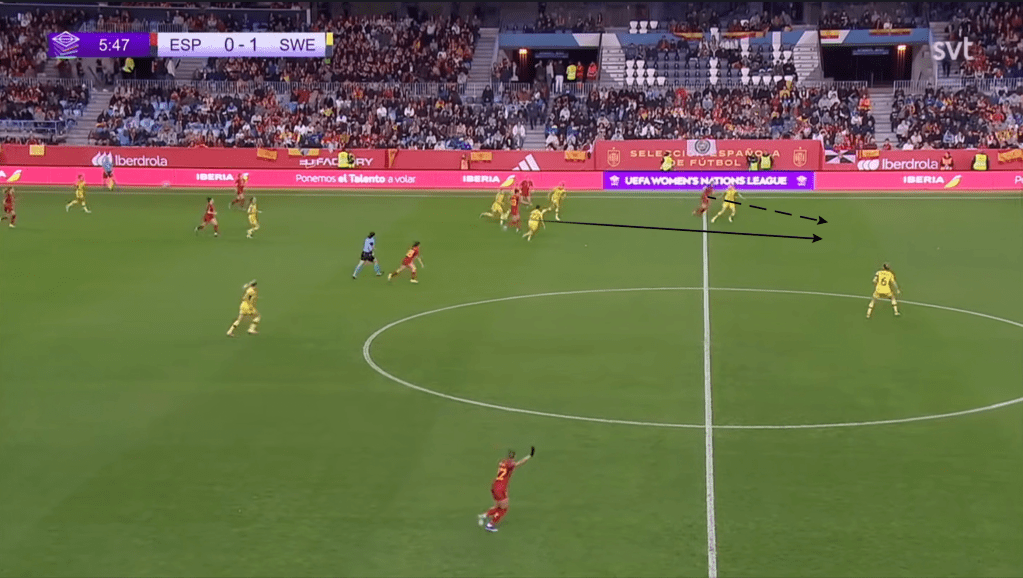
Another example of this can be seen in the sequence of images below.
A).
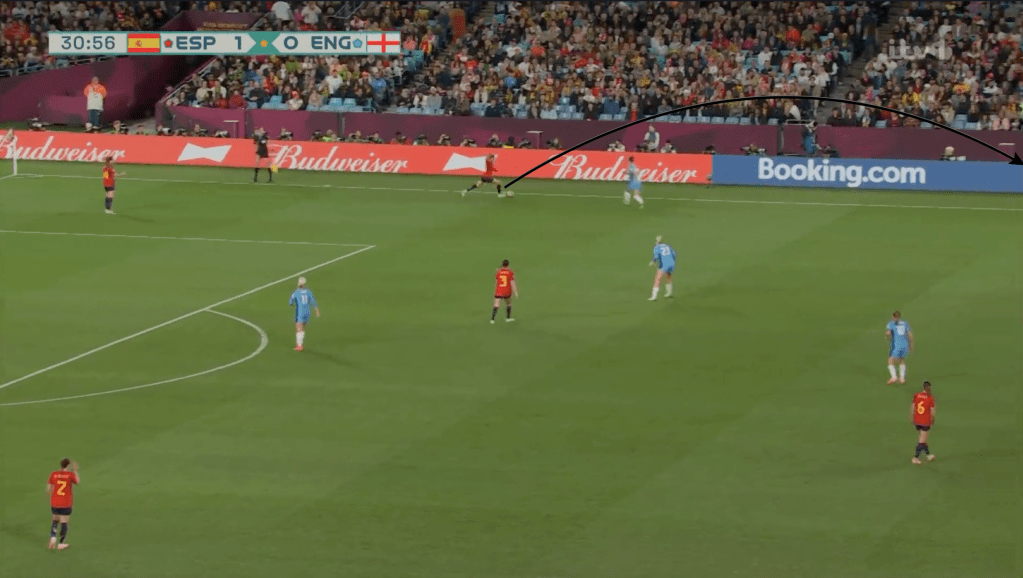
B).

C).
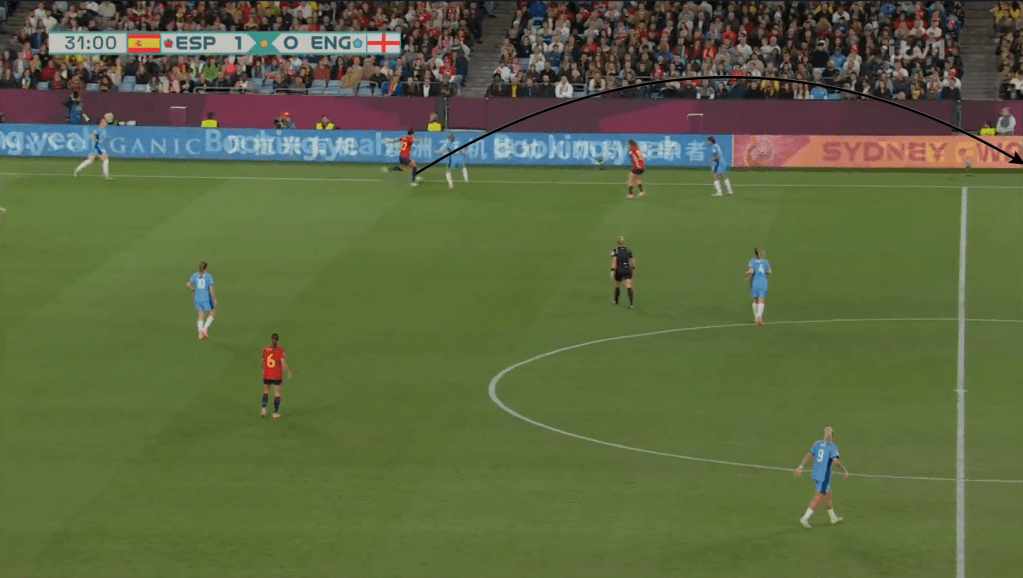
D).
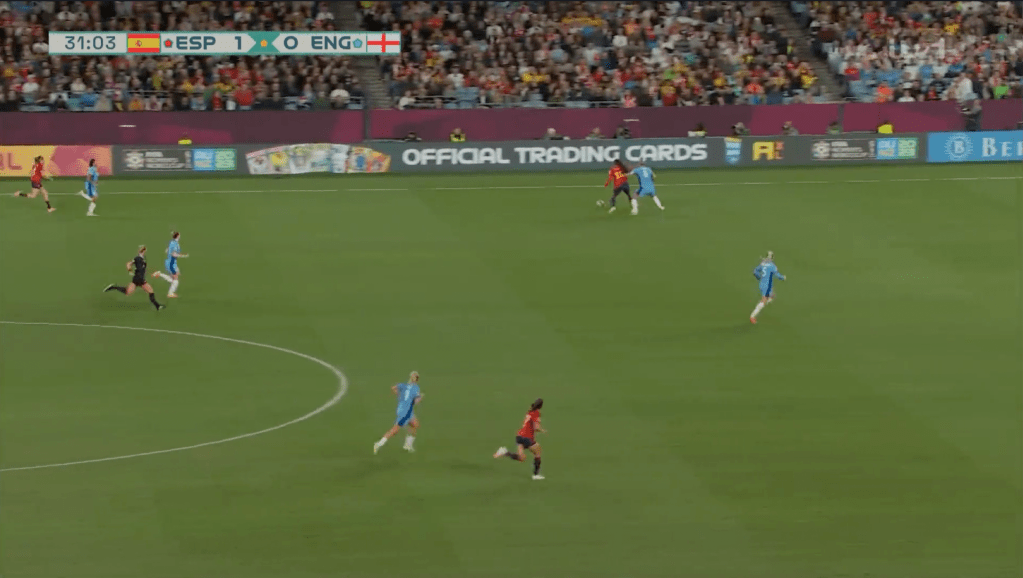
Spain’s approach to progression and chance creation does not change drastically in cases where they are further up the pitch. When the opposition have dropped deeper to defend from the middle third or final third Spain generally still look to play vertical passes to forward players as well as switch the ball to the flanks after doing so. On the left-hand-side, Hermoso as well as Cladentey look to receive these passes, Caldentey moving freely across the left flank and central areas to offer herself as an option to receive the ball. Caldentey, does not often look to receive the ball in extremely advanced areas near the last defensive line of the opposition but closer to the midfield line, which can be seen in the image below. After receiving the ball, Cladentey once again looks to switch possession to the opposite flank.
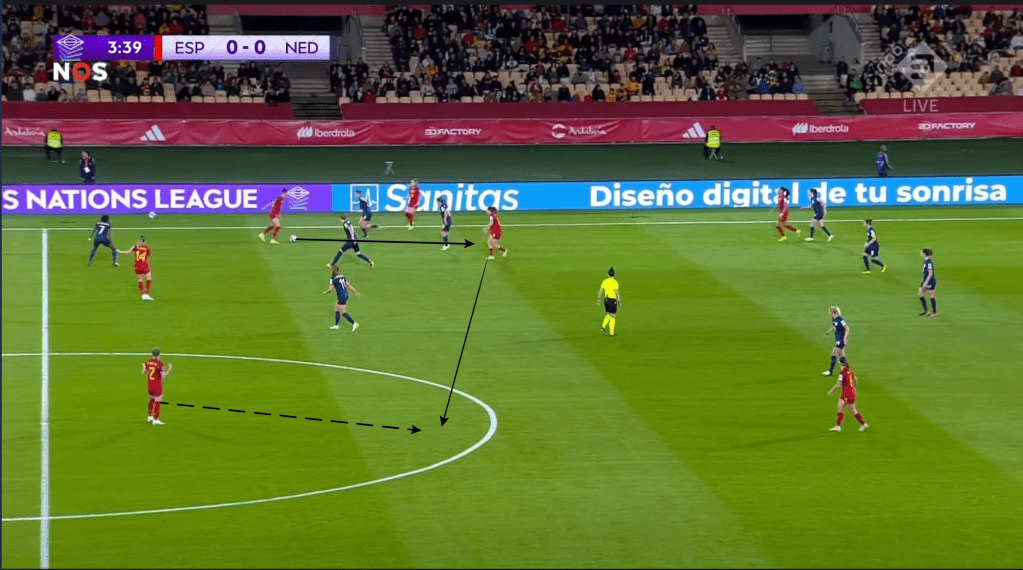
Hermoso on the other hand, is capable of positioning herself in all areas across the pitch in order to receive vertical passess. This can be seen in the image below, with Hermoso moving into a very advanced position in between the midfield and last defensive line of the opposition.

After the pass is played, once again, Spain look to play towards the flanks.

What is also more prevalent from Spain in the middle and final third, is the rotations between players, specifically between Carmona, Cladentey and Hermoso. As stated numerous times previously, Cladetey often positions herself further infield than she does on the touchline. This creates opportunities for Carmona to advance further up the pitch and Hermoso to move towards the wide area to receive the ball, which may lead to an opposition defender tracking her movement and creating more space in the centre of the pitch. This can be seen in the images below.
A).
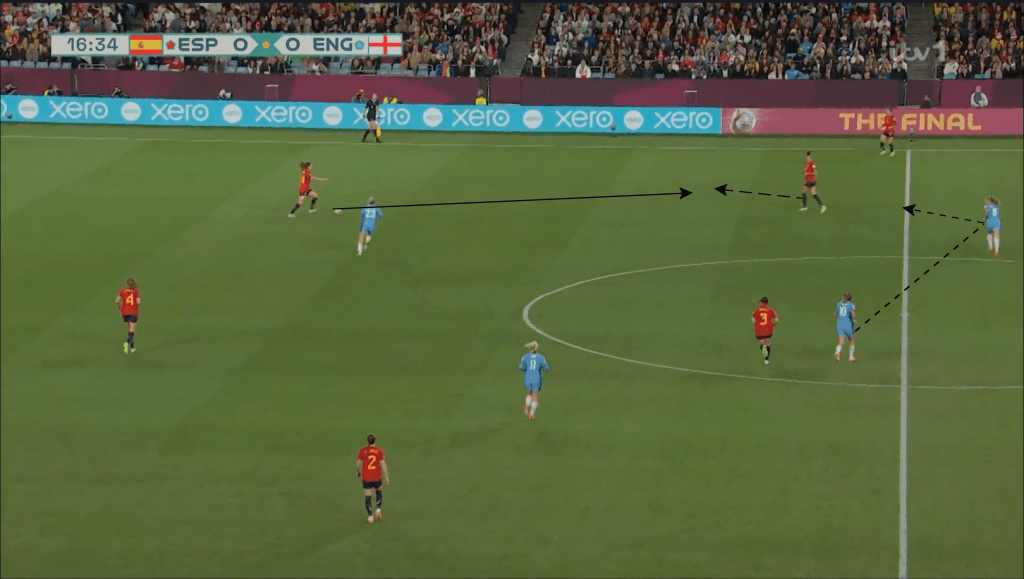
B).
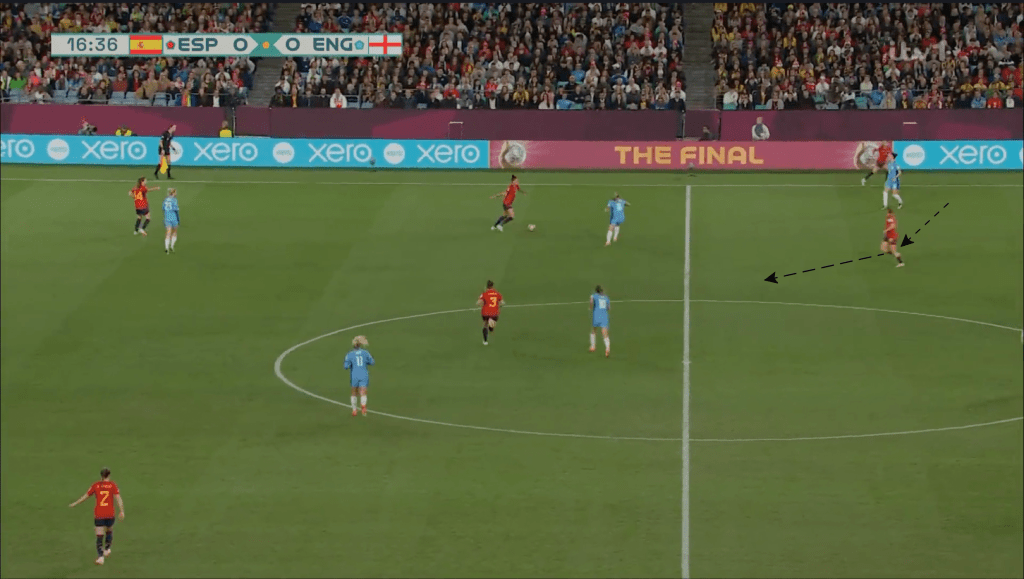
C).
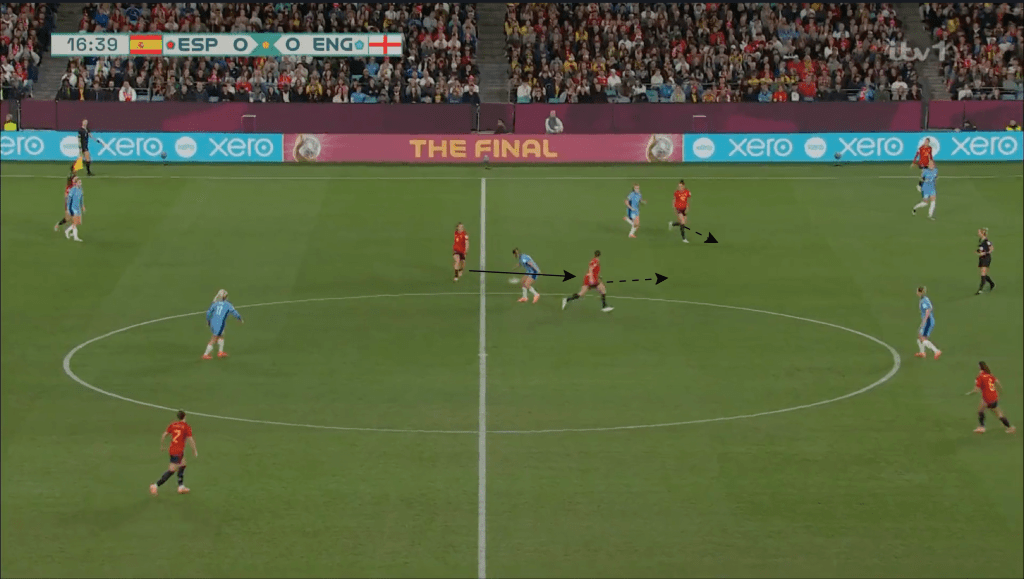
D).
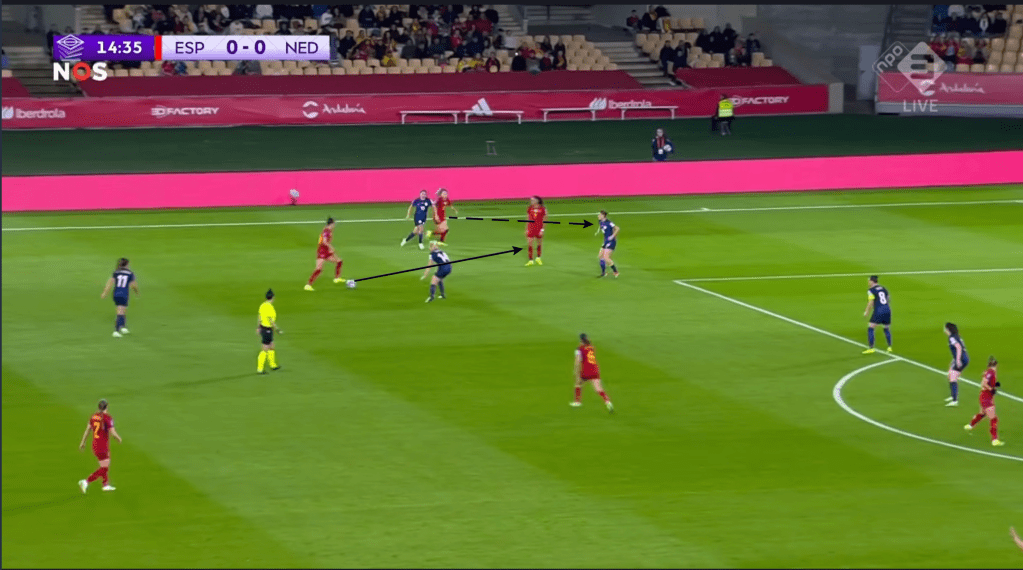
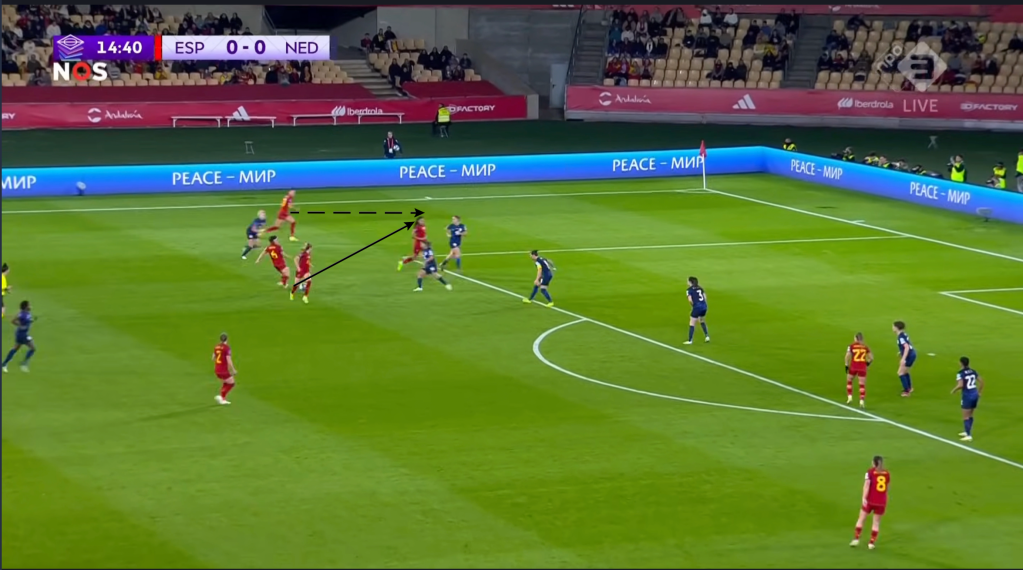
The previous examples showcase, the rotations that may take place between the players on Spain’s left hand side as well as Caldentey once again receiving the ball between defensive lines. In addition, it also highlights how Spanish players look to make forward runs into space behind defenders whcih goes back to Spanish players looking to attack the spaces behind opposition lines. As seen above in image C), after Caldentey receives the ball, both Teresa and Hermoso make runs into the space which Caldentey is coming from, with Carmona in image D) also making a run behind the back line that puts her in position to deliver the cross. Thus Spain are constantly looking to exploit spaces behind defenders and in between defensive lines. This aspect of Spain playing these vertical and diagonal passes to players to players between defensive lines and then subsequently attacking the spaces behind defensive lines can also be seen below. Hermoso initially moves to receive the ball from Carmona.
After playing the pass, Carmona then makes a run forward behind the last line of the opposition defence, whilst Hermoso plays a pass to Paralluello, with the striker in between the line of the midfield and last defensive line, with the striker playing the pass back to Hermoso.
Subsequently, Hermoso once again plays a similar forward pass to Carmona, who then passes to Bonamti.

After receiving the ball, Bonamti passes to Hermoso who makes a run behind the opposition defence and creates a great opportunity for the cross.
On the right-hand side of the pitch, the right winger del Castillo positions herself near the byline and unlike Caldentey on the opposite side does not invert further infield between the lines of the defence. As stated previously when building up from deep areas, Bonmatí is not often the recipient of vertical or diagonal passes from the centre-backs or full-backs. However, in the middle and final third, such passes are played to the midfielder more often, with Bonmatí also looking to receive these passes between the lines of the opposition defence. An example of Athenea and Bonamtí’s positioning can be seen in the image below, with Bonamti receiving the ball from the centre-back, before playing a pass to Laia Aleixandri with Aleixandri then playing a pass to Athenea on the touchline.
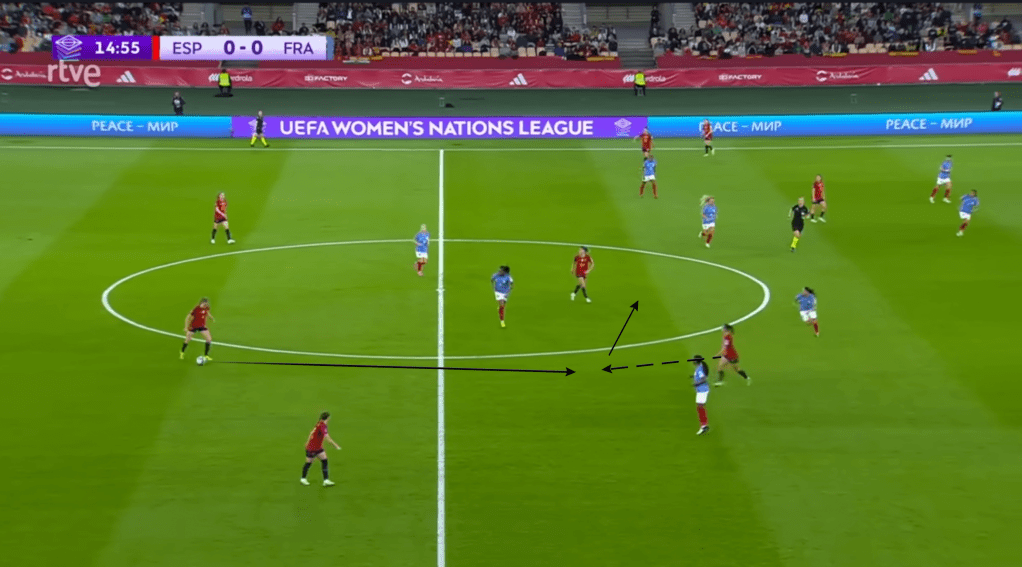
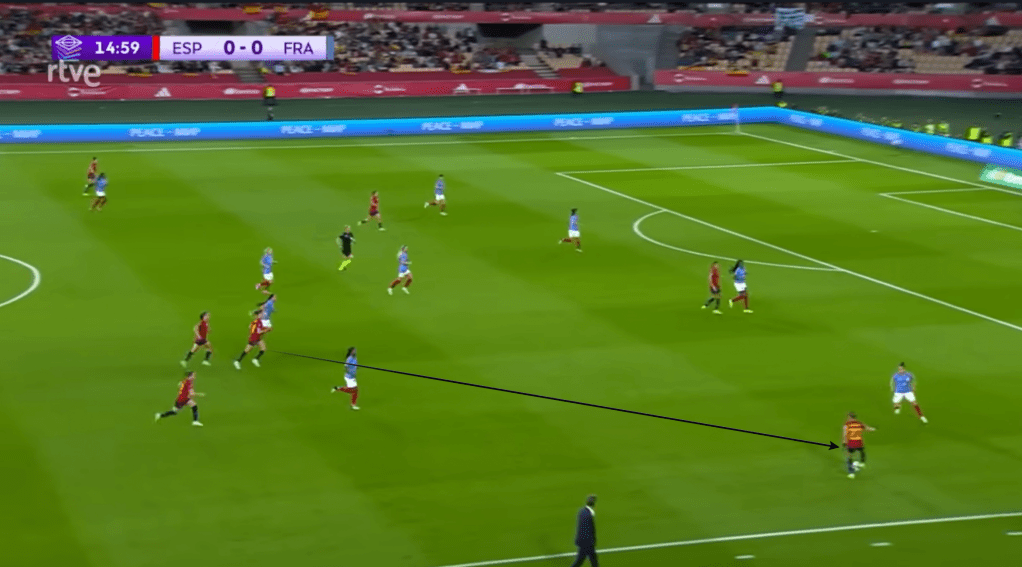
The Spanish Players on the right-hand side are able to create the same dangers as the players on the left-hand side, with Batlle the right-back also looking to make forward runs behind the lines of the opposition defence after playing the ball.
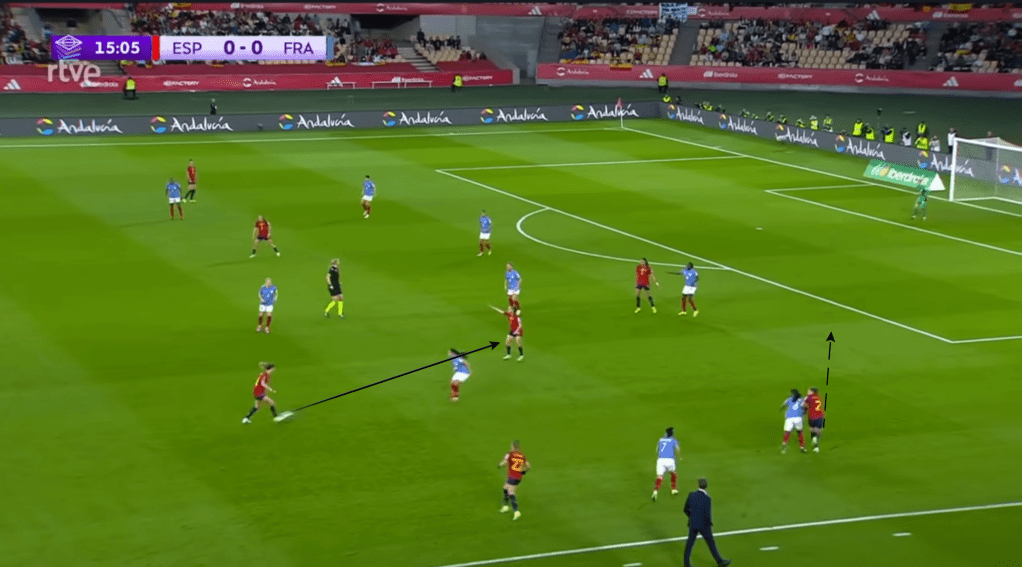
In both the previous examples on Spain’s left hand side as well as their right-hand side, it is important to note the position of Paralluelo, with the striker often moving towards the flank on which the ball is on. This results in the striker moving into positions where she can also receive vertical and diagonal passes from midfielders and defenders or make diagonal runs across the back line. Often when Paralluelo moves towards the flanks, the winger on the opposite side moves centrally into the box.
Conclusion
From a tactical perspective, the Spanish Women’s National Team is fascinating to watch. The different patterns and actions displayed by players above showcase the understanding that players have of the game. The examples also display how each player is aware of their role and abilities that allow them to solve different problems on an individual level, a collective level and a team level. Thus the next part that is essential to understand, is how this understanding can be developed and trained, which will be discussed in the next article.


 Skmm-ftbl
Leave a comment