Flightless Seagulls.
At first glance, it would appear as if Graham Potter’s Brighton and Hove Albion have been poor this season as they have consistently lingered at the bottom, placing the side firmly in the relegation battle as we approach the business end of the season. However, according to Brighton’s underlying numbers, the seagulls should be nesting comfortably in 5th place. However, this has not been the case, mainly due to a consistent underperformance in front of goal, as Brighton have only netted 27 goals this season, with Xg suggesting they should have scored 45, an underperformance of 18. Despite their position, those who have followed Brighton and paid close attention to their underlying statistics have begun to hold Graham Potter’s managerial ability in high regards. This mainly began as Graham Potter’s men unluckily lost to Chelsea and Manchester United in the space of a few weeks. One of the main attractions of Potter’s side has been their competence in the build up phase of the game, the focus of this article.
build up in midfield and deeper areas.
On paper, throughout the first half of the season, Brighton regularly lined up in a 3-4-1-2 formation, which would turn into a 3-2-3-2/3-4-1-2 and other similar variations all using a double pivot. By using a double pivot and a back 3 in the build up the seagulls could alternate between stretching the first line of pressure and at times narrowing the midfield due to the fact that the double pivot were often positioned in close proximity to one another. By utilizing a back 3, Brighton in most situations were able to easily circulate the ball at the back against the first line of pressure due to their numerical superiority. When coming up against systems with 2 man midfields Brighton were also able to overload the centre, with Trossard in the attacking midfield position receiving the ball between the lines, or to the right of the double pivot , as well as Maupay occasionally dropping deep into the midfield.
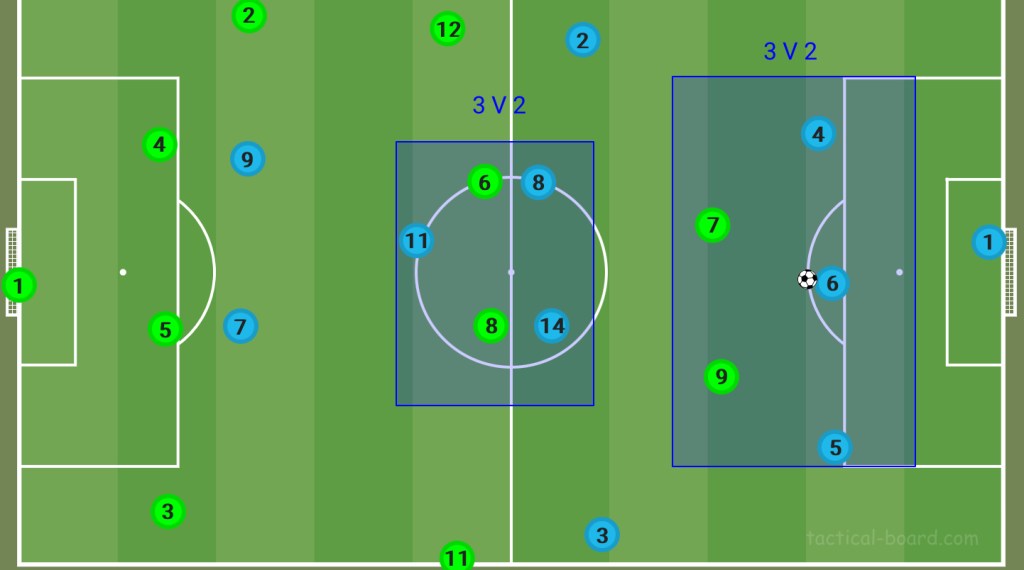
This could be seen in the later stages of a game against wolves earlier on in the season, where wolves pressed Brighton in a man oriented 5-4-1 mid-block. By the 60th minute, wolves were looking to hold onto to their lead and dropped their pressing further down the field, allowing Brighton to play further up the field. With Fabio Silva as the lone striker,occasionally pressuring the back 3, the seagulls were able to easily circulate the ball at the back and could drive further into the midfield unopposed. In the picture below, we can see a scenario where Dan burn is in possession of the ball, slightly ahead of his other two centre back partners. Maupay has dropped slightly deeper into the midfield and as a result, Ruben Neves has slightly adjusted his body position to be in a position to potentially intercept a ball played to him. Moutinho would orient his body position to Trossard, while Silva orients himself to Ben White and as a result of this, Davy Pröpper(highlighted) is left free in the midfield. Neto, the wolves winger could step infield and position himself close to Pröpper but that would leave a channel open on the right hand side, that could be exploited by a quick switch to Webster who is excellent at carrying the ball forward into midfield.
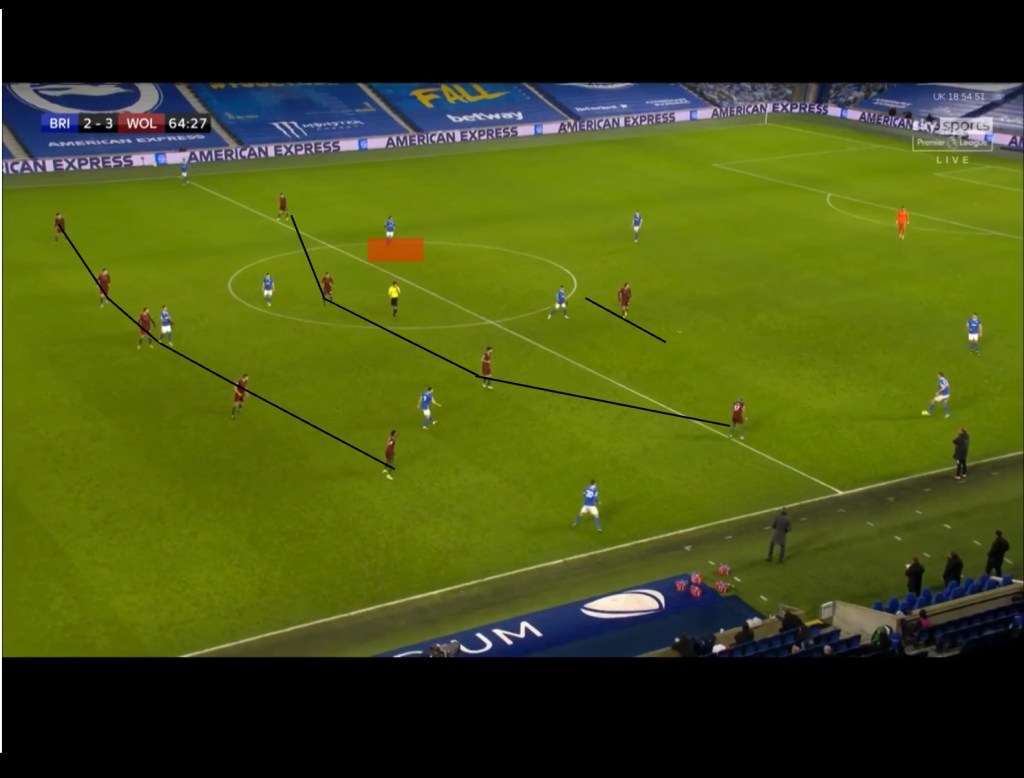
Dan Burn would eventually play the pass back to Dunk who with space and time due to the lack of pressure, easily picks out Pröpper, the free man. Moutinho now scurries forward to press Pröpper and as a result leaves Trossard free in the middle of the park, creating a passing option for Pröpper.
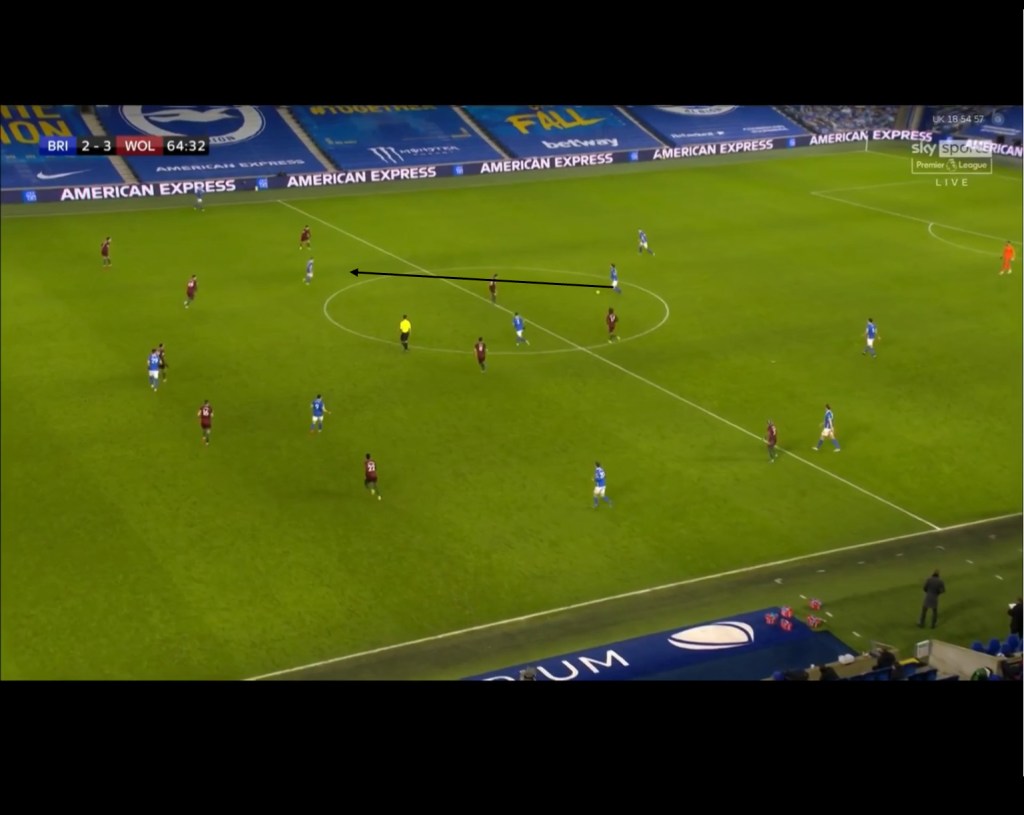
Throughout the 1st half of the season, Brighton looked to either progress the ball centrally when they could, before playing it out wide, or circulate it the ball around the back, before switching play to one of the RCBs or LCBs who would take advantage of the oppositions shifting defence and advance the ball forward. This could particularly be seen in the seagulls game against West Ham in late December. As seen below, West Ham pressed Brighton in a staggered man oriented 5-1-3-1(5-2-3/5-3-2 variations), with either Soucek or Rice playing in front of the defence, preventing Trossard from receiving the ball easily between the lines. Due to Haller playing as the lone striker as well as the large spaces between the back 3, Graham Potter’s back line were once again be able to pass the ball around at the back, often with ample space and time. The double pivot playing in close proximity to one another also narrowed West Ham’s midfield and as a result Brighton could switch play to the right hand side allowing Webster to drive forwards with the ball. Webster this season, has played a pivotal role in possession due to his excellent ball carrying ability that has seen him progress the ball 6.10 times a game the most out of the Brighton back line, and just 2 progressions behind John Stones.
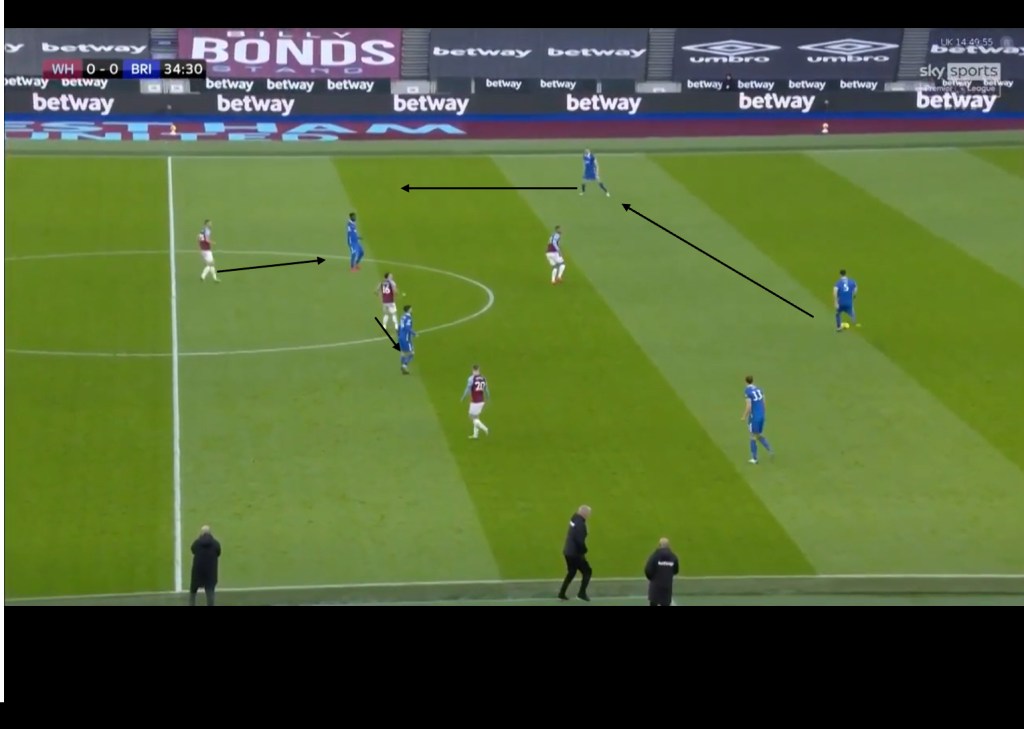
The benefit of having the stretched back 3 is the fact that if one of the midfielders steps out to apply pressure, the opposing teams pressing lines will be stretched, creating space for midfielders to receive the ball. This can be seen below as after a switch to Webster, Noble hurriedly pushes up to press Webster to prevent him from driving forwards into the space. However, by doing so Bissouma is now able to receive the ball in the midfield.
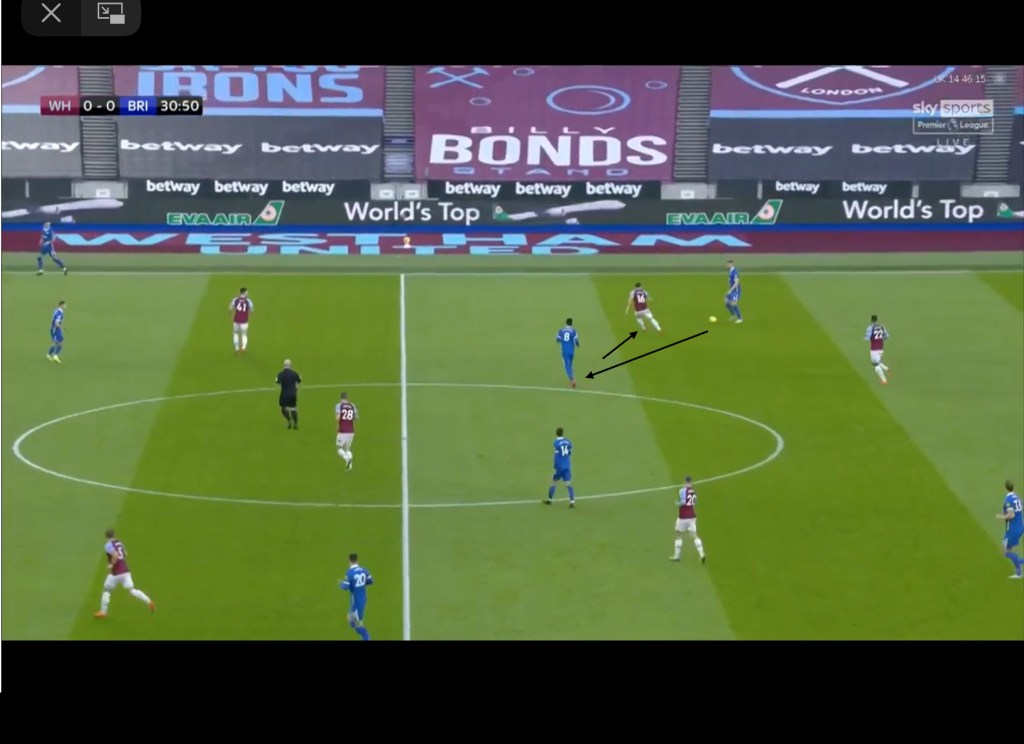
It is also important to mention that in many games throughout the 1st half of the season, if Trossard was unable to regularly receive the ball between the lines, he would occasionally take advantage of the narrowed midfield and drop deeper and move into the either half space, depending which side the ball was on. This could be also be seen in the West ham game.
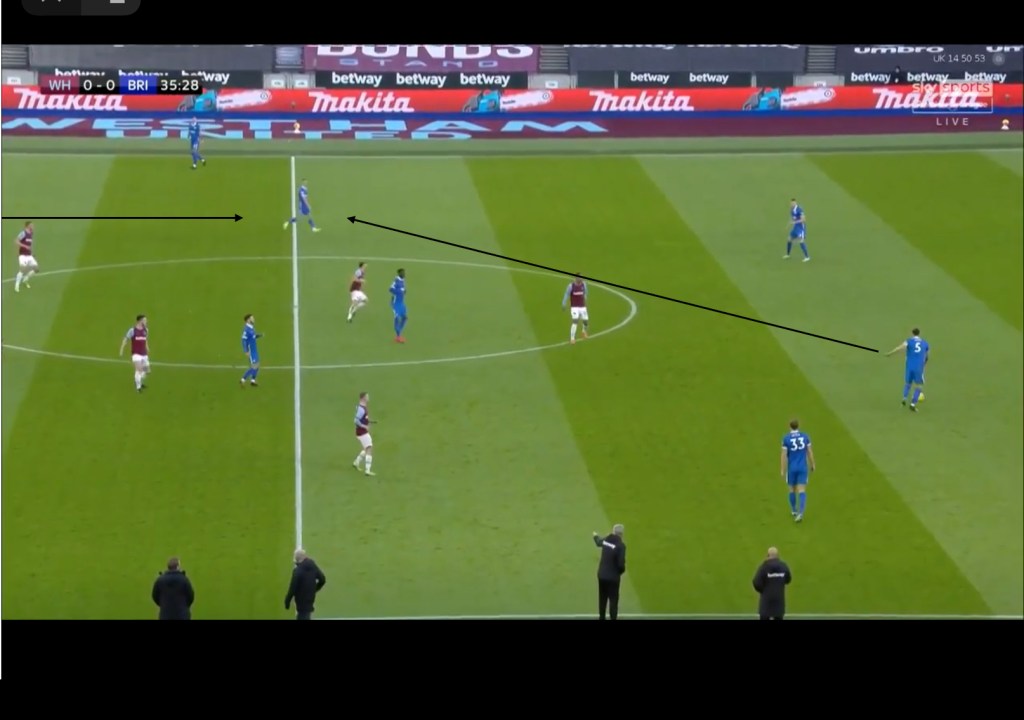
Problems in build up
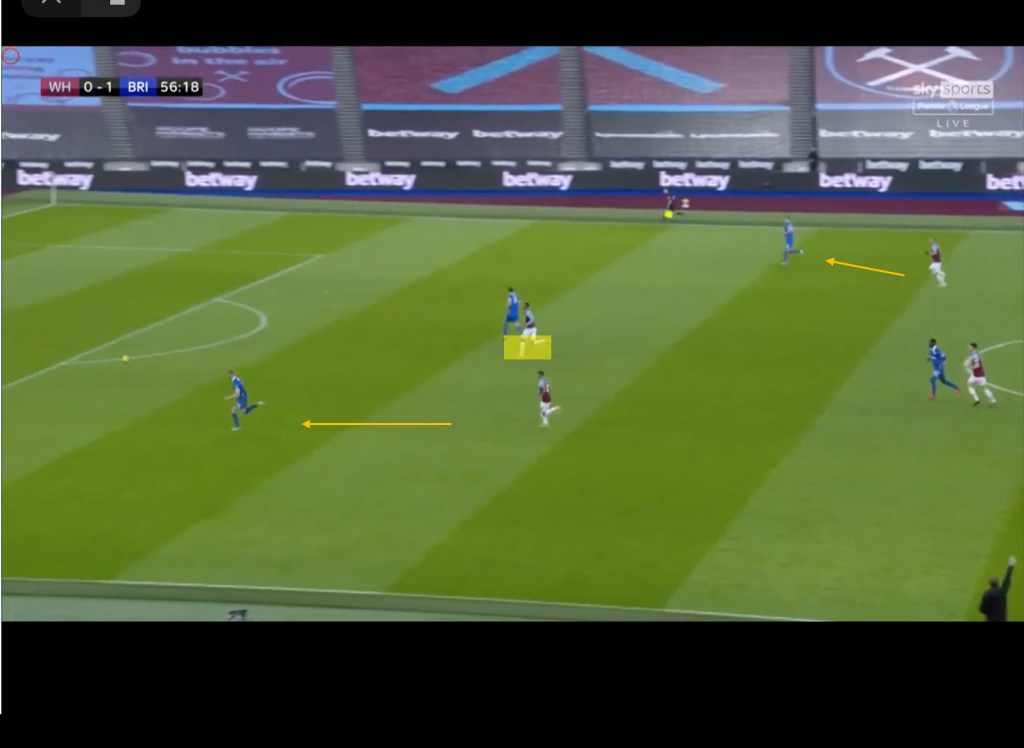
Although working well in a handful of games, Brighton’s build up play did not always allow them to consistently play around the oppositions press using the methods mentioned above. This could be see in the 2nd half of their game against West Ham, as David Moyes’ side changed their pressing approach after the interval. West Ham would abandon their staggered approach and switch to a 5-2-3 where Rice and Soucek would prevent passes into the double pivot of Lallana and Bissouma by marking them tightly from behind. Lanzini would push up and press Webster, preventing him from carrying the ball forward into midfield and use his cover shadow to prevent passes to Trossard.
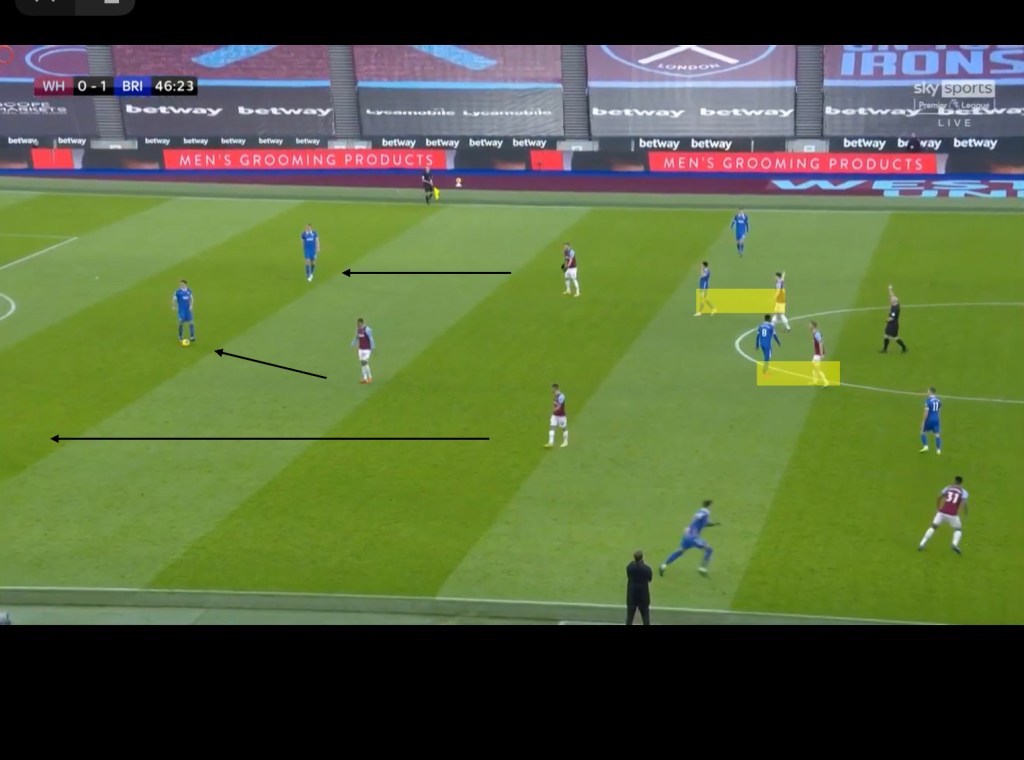
Backwards passes from the Brighton players, were used as triggers for West Ham’s front three to press Brighton’s back three. The switch of approach from West Ham meant it was difficult for Brighton to circulate the ball at the back and play passes into the midfield, and as a result, Brighton were forced to play long balls further up the pitch which did not always find their targets.
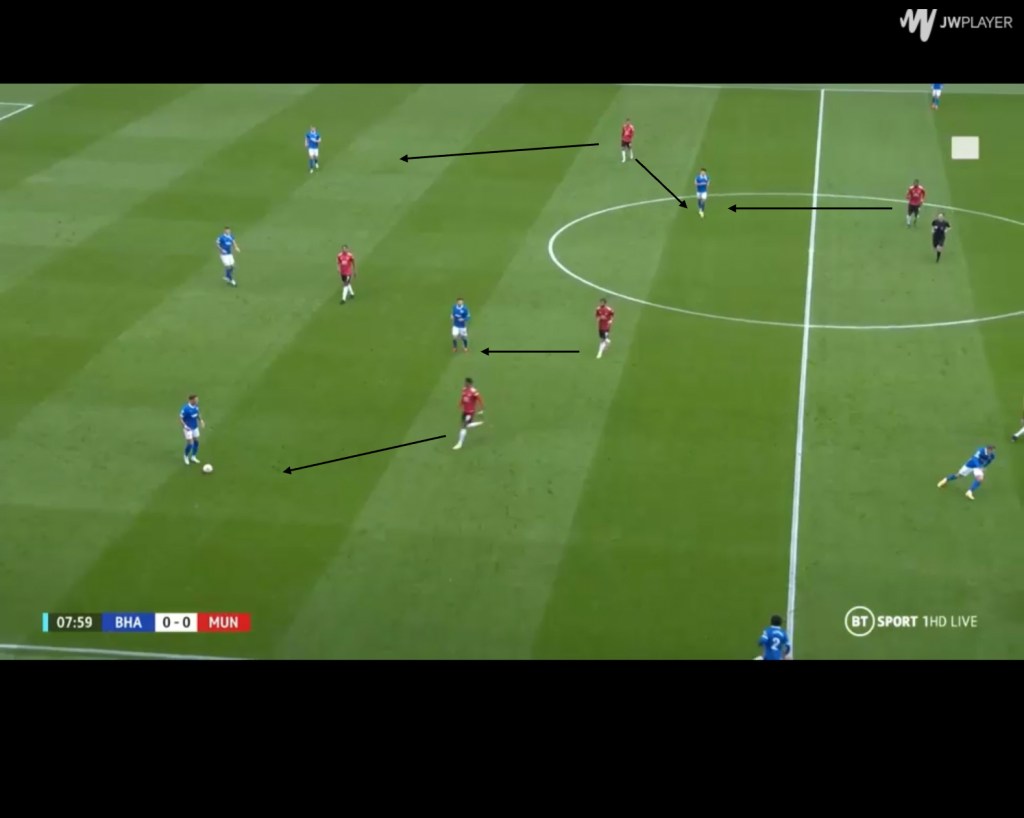
The West Ham game was not the only situation where Brighton failed to progress the ball as comfortably as they would’ve liked. Brighton also struggled to progress the ball cleanly in their game against Manchester United. Although Brighton were the better team against United, and should have comfortably won the game, United managed to force Brighton backwards and sideways in the build up and below we can see why. Manchester United pressed in a 4-2-3-1 and created a 3v3 in midfield whenever they shifted from side to side, with Fernandes marking the ball near central midfielder in the double pivot. Rashford would move from an inward position outwards to press Ben White and prevent him from carrying the ball forwards forcing him to play a pass to the WB, Lamptey, while Matic would follow the movements of Trossard, preventing him from receiving the ball in between the lines. Martial stayed close to Dunk, which would potentially force Ben White to play a deeper pass to the goalkeeper when recycling possession, allowing United’s press to advance further up the field. By forcing Brighton out wide, United could favorable opportunities to regain possession and although Brighton, throughout the season have not shied away from playing long balls at times, United’s press instigated the use of longer passes more often.
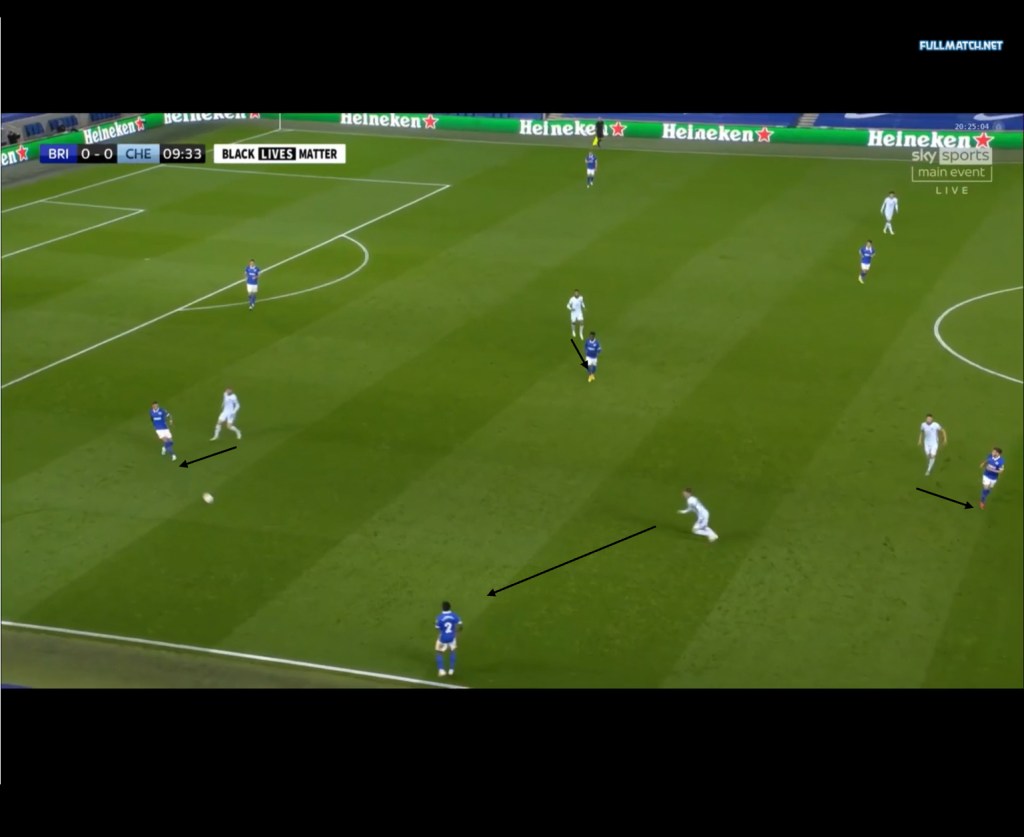
A similar scenario where Brighton were forced out wide occurred in a game against Chelsea at the start of the season. Chelsea pressed in a 4-4-2 and although this formation has a two man midfield, Chelsea’s front 2 would alternate in marking Bissouma in the double pivot, while the other forward would press the ball carrying CB and Jorginho would stay deeper to follow the movements of Lallana who was playing the “Trossard role” and as a result, Brighton would not be able to have numerical superiority in the centre.
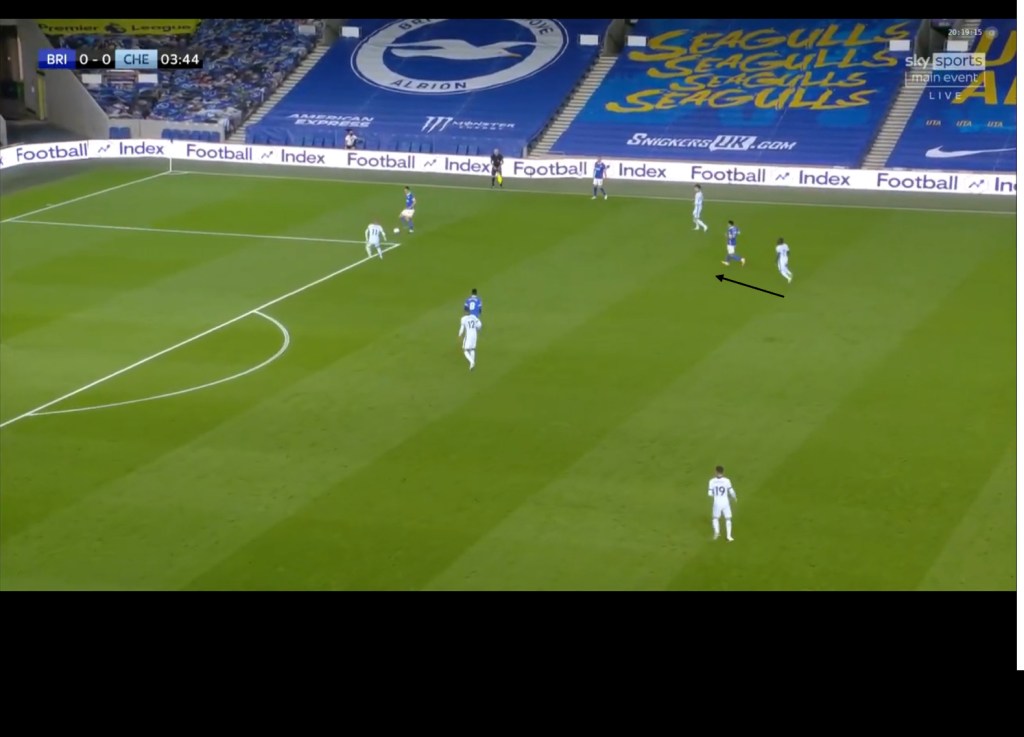
When the ball shifted to Chelsea’s right hand side, Kante would stay closely behind Alzate, preventing passes into him and encouraging passes into wide areas, where Chelsea attempted to win the ball back.
Mid Season Adjustments
In the second half of the season, Graham Potter has made adjustments to his side’s formation, that have allowed them to more frequently play past an opposition press. As referenced above, Brighton struggled in certain games where their double pivot were marked closely, preventing them from playing any meaningful role in the build up as the opposition aimed to funnel the play out wide. Potter has solved this problem by more often only using one midfielder in the build up(Bissouma)instead of two, pushing the the other midfielder further up the pitch whilst Trossard has continued occupying the same position he has all season. Potter has also opted out of the 2 striker system, choosing to play an extra midfielder instead and as a result Brighton more recently have played with a sort of midfield diamond.
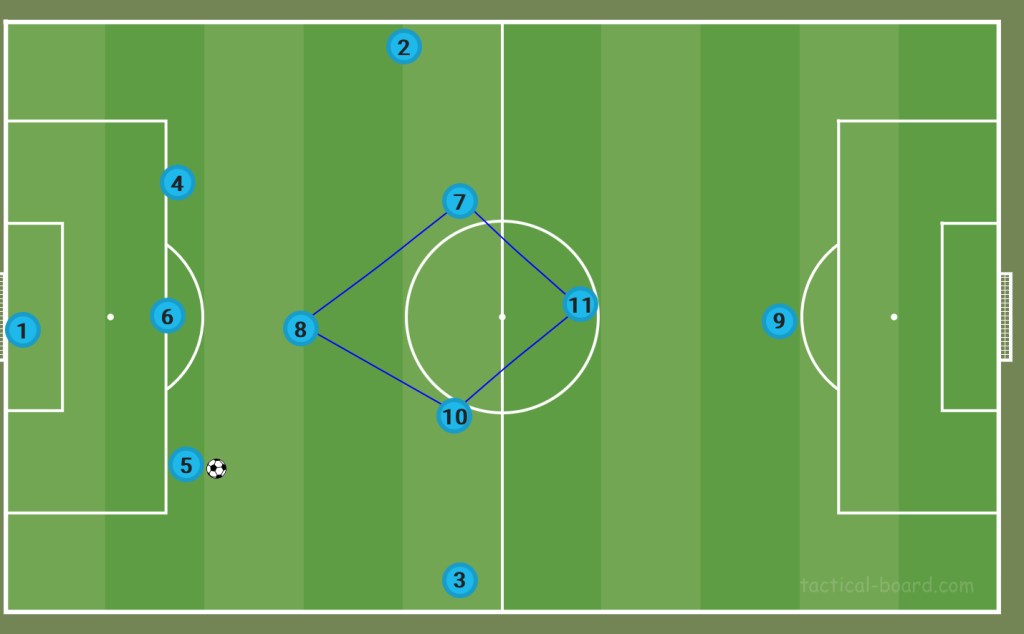
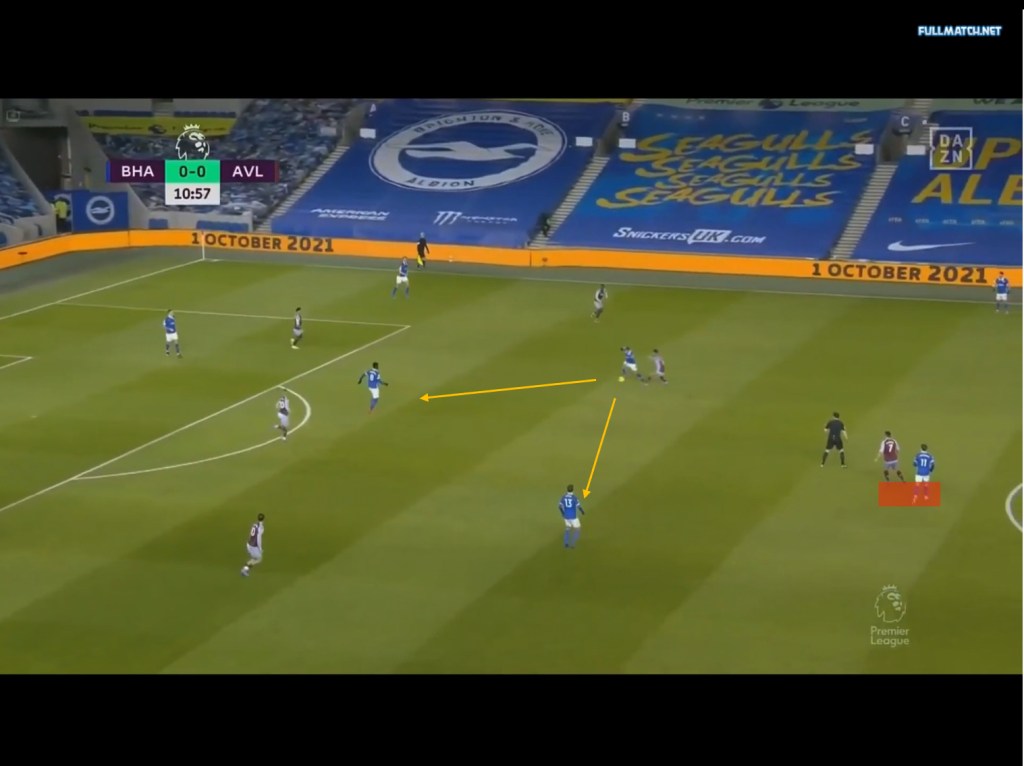
With the switch, the seagulls are once again able to gain a numerical advantage in the midfield and due to the higher positions of the two midfielders, the deeper half spaces are left vacant and this combined with the numerical advantage in the midfield allows the midfielders to arrive into the half spaces and play layoffs or pass to the free man. This could be seen against Aston Villa, with Villa’s press drawing many similarities to that of Chelsea’s mentioned earlier. As seen below, Villa pressed in a 4-4-2 with the front two alternating in pressing the CB ball carrier and covering Bissouma in the midfield, with McGinn orienting himself to Pascal Groß. On Brighton’s left side of the field, we can see how the area that used to be occupied by one of the midfielders in the double pivot is now empty.
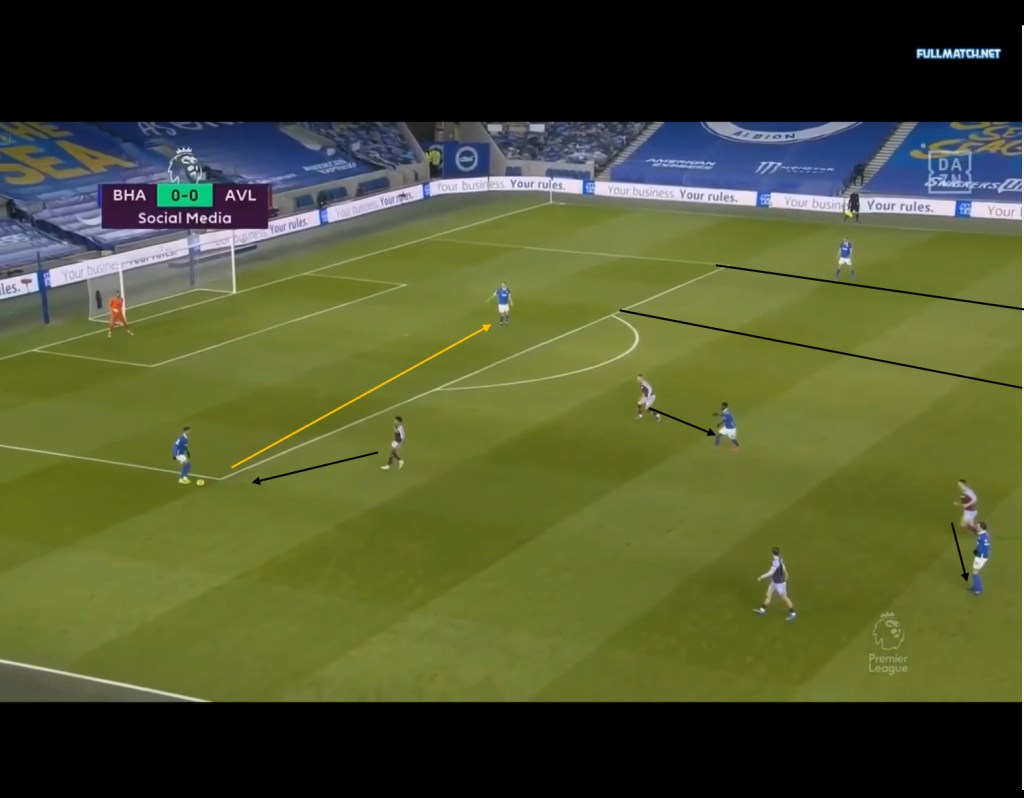
As the ball is passed to left side of the defence, Mac Allister now drops into the half space to receive the ball. Trossard’s positioning at the tip of the diamond delays Douglas Luiz from instantly applying pressure to Mac Allister and deterring pass the pass to him.
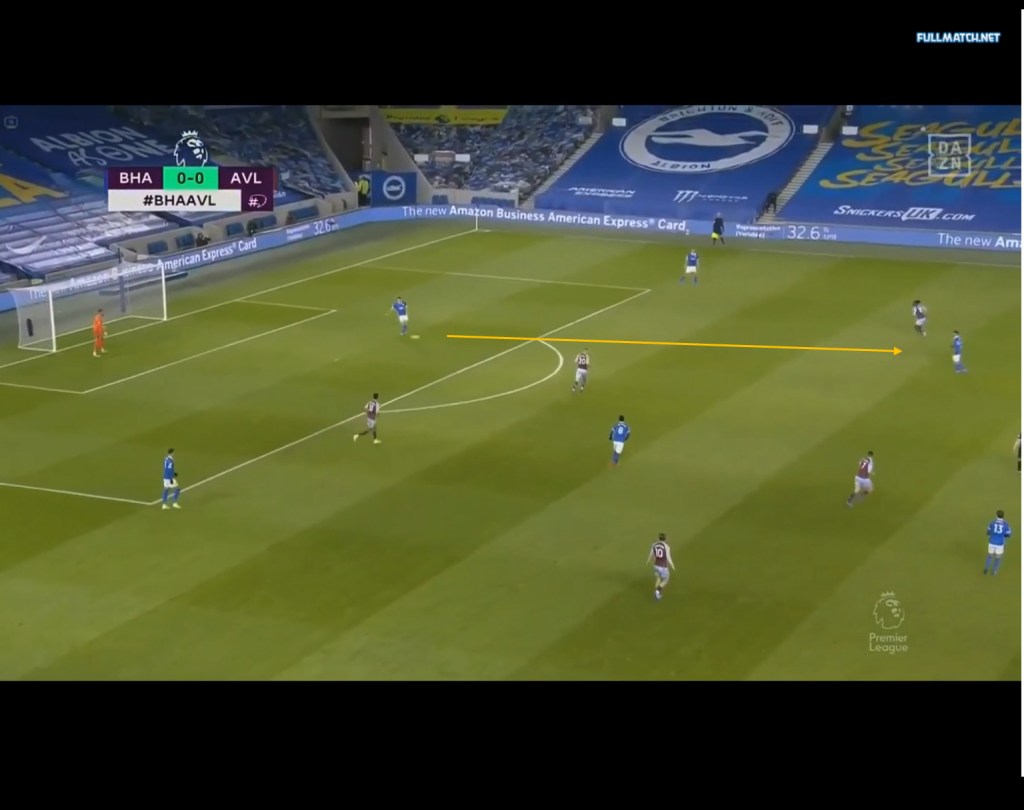
A few minutes earlier the same scenario occurred , with Mac Allister receiving the ball in the deeper half space and Luiz shifting to press him.
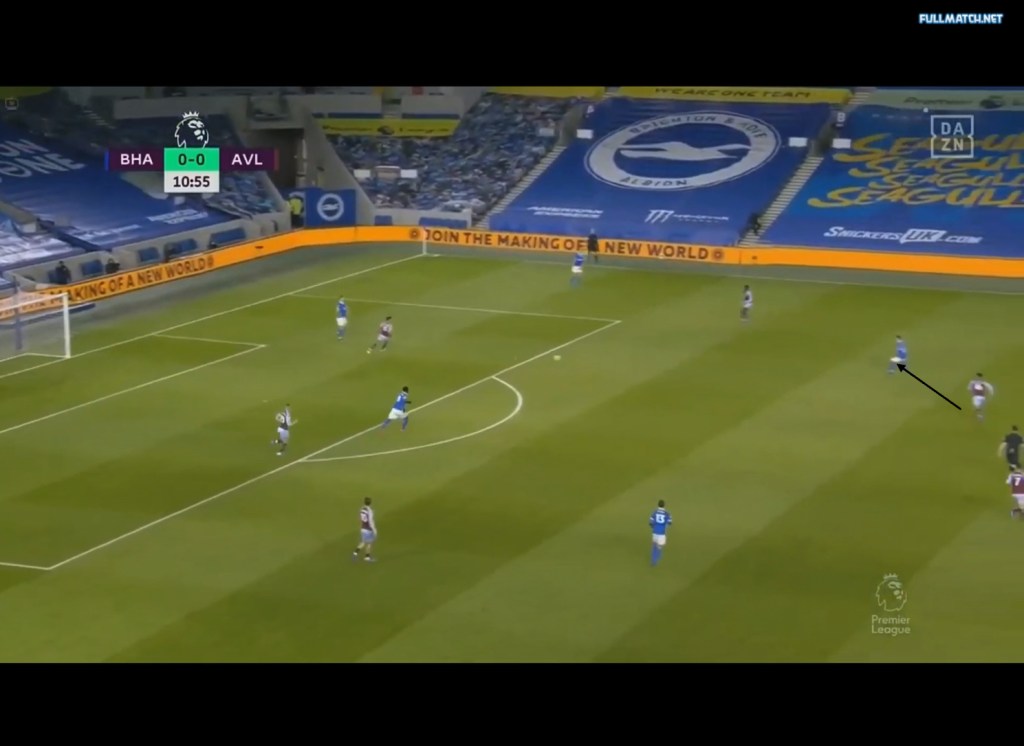
A few seconds later we can also see how Trossard’s position helps to create the free man as McGinn, the number 7, shifts to his right in order to cover Trossard and as a result leaves Groß free to receive the ball but Mac Allister opts rather to lay off the ball to Bissouma.
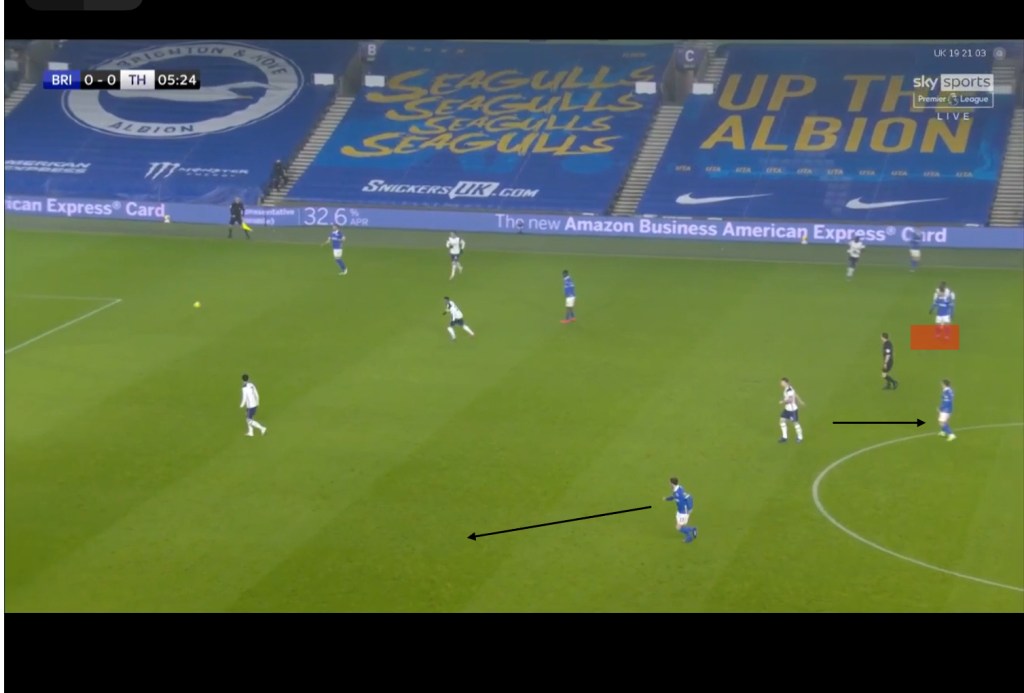
The benefits of the switch could also be seen in Brighton’s 1-0 home win against Spurs. Spurs pressed Brighton in a 5-2-3 which earlier on in the season in the second half against west ham restricted the seagulls ability to circulate and play the ball out from the back. However as shown below, when pressed with the same formation, with Spurs front 3 behaving similarly to West Ham’s front 3, Potter’s men were still able play out from the back. This is mainly due to the fact that Brighton took advantage of the 4v2 in the midfield, with Groß shifting over to the right hand side unmarked, due to Hojberg’s orientation to Trossard and Ndombele’s to Mac Allister.
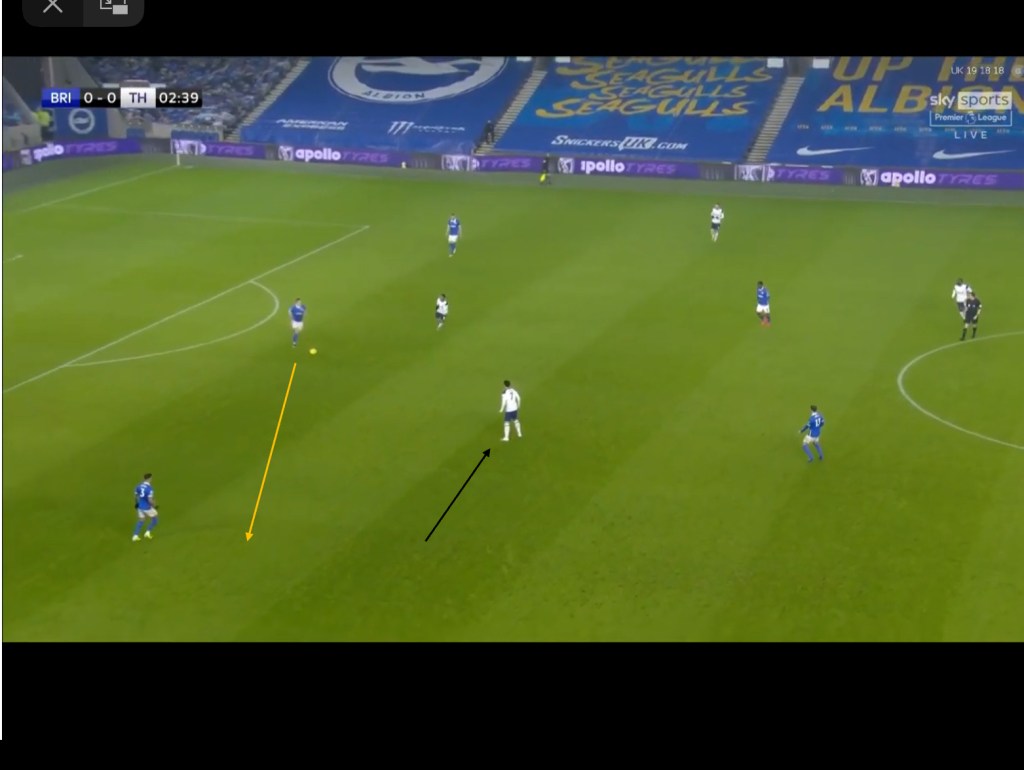
In a another scenario, we can again see how Groß is left unmarked due to Trossard’s positioning up field pinning Hojberg and preventing him applying pressure behind Groß. As a result, Son is forced to indent his positioning slightly to prevent passes into Groß with his cover shadow which creates space for Ben White to receive the ball and dribble into space, progressing the ball forward.
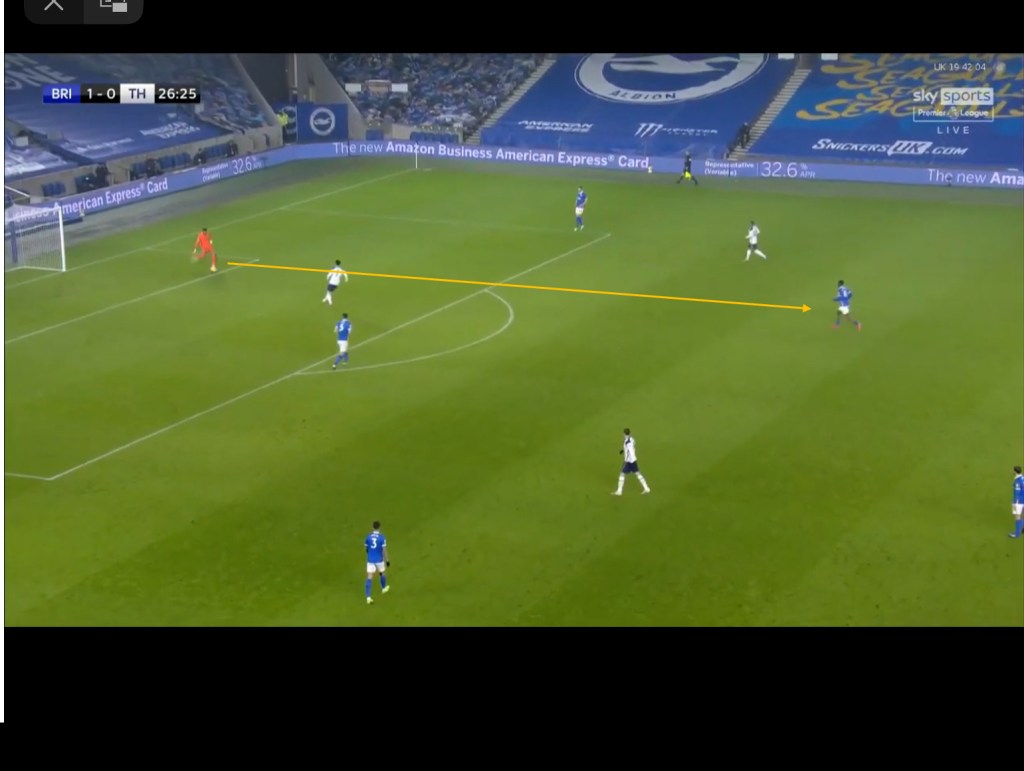
Mac Allister and Trossard through the course of the game continued to pin Spurs midfield pairing with their high positions, which allowed Bissouma to receive the ball unmarked in the midfield at points in the game as well.
Brighton further up the pitch
75% of Brighton’s attacks have come down the right and left hand side this season, as they build up through the centre when possible, before playing the ball out wide. Through the course of the campaign, the seagulls have used cut backs and crosses as their chief form of chance creation averaging 20 crosses per game and as a result 72% of their shots have come from central areas in the box.
Brighton create these cut back and crossing opportunities mainly through Pascal Groß’ movement from the half space channel out wide. These up runs are facilitated by the width of Joel Veltman in the WB position, as well as the movement of the attacking midfielder into the box. This is depicted below, as the width from Veltman and the unoccupied space ahead of hike creates an are of space for Groß to run into
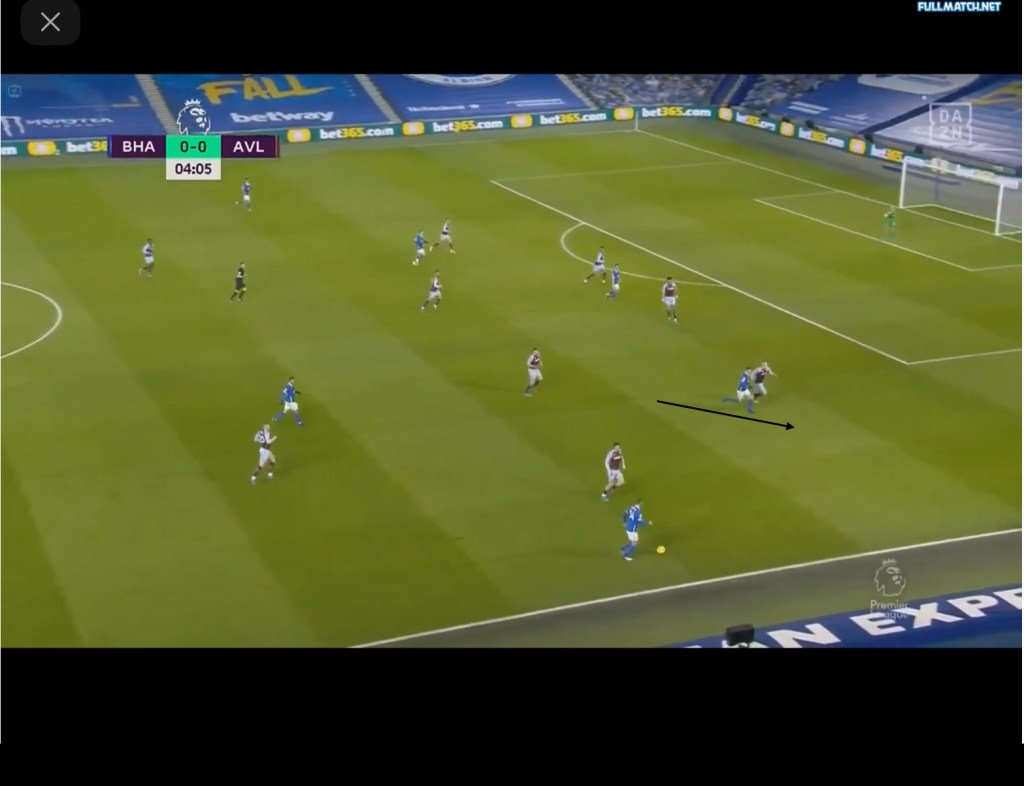
Nevertheless, Groß is not the only player that makes this run, as Maupay and Trossard occasionally make a similar run but mainly in transition.
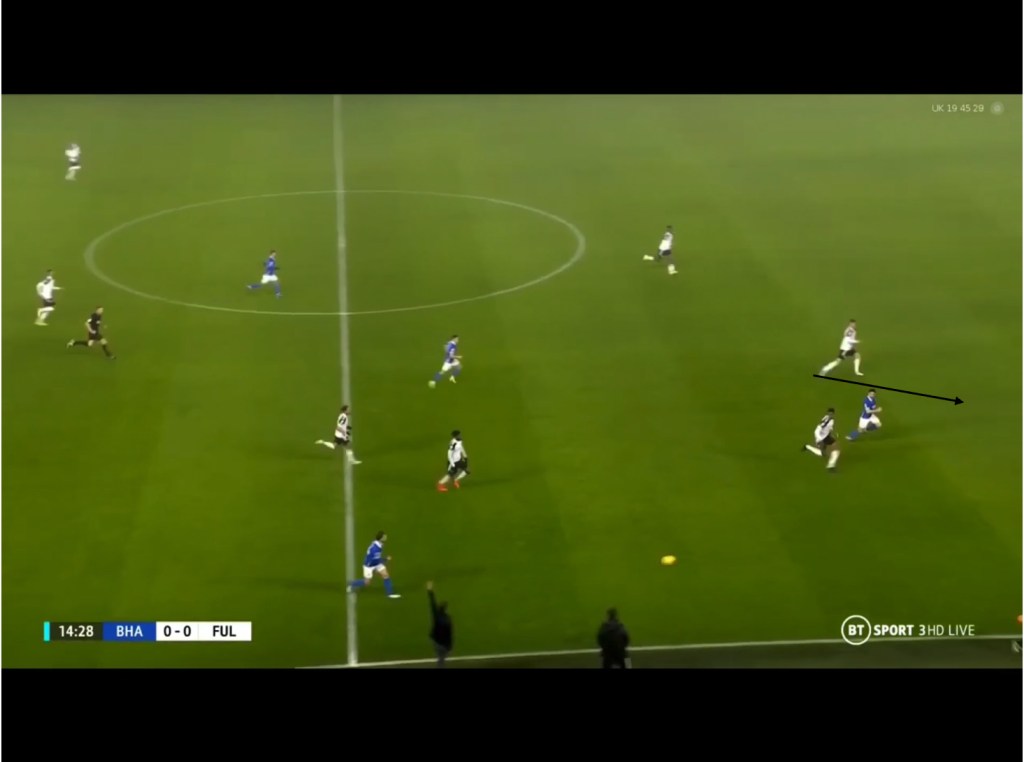
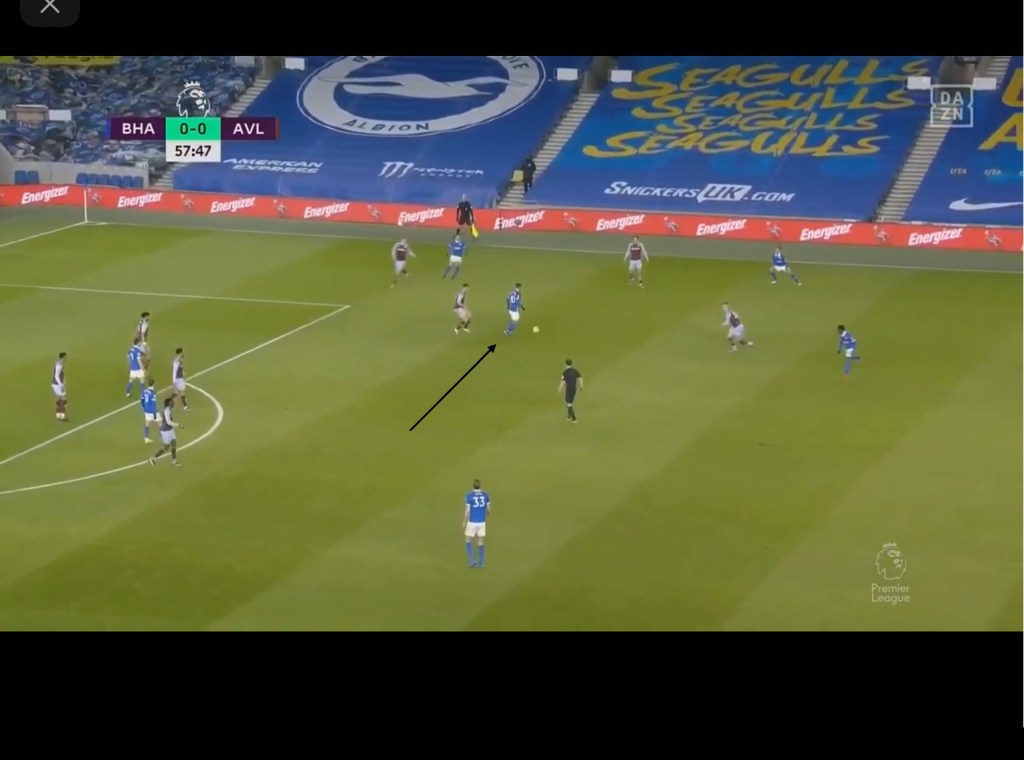
As shown below when in possession further up the pitch, Brighton also look overload the wide areas, with Alexis Mac Allister. Mac Allister often drifts to whichever side the ball is on to support his teammates in possession and be used to switch play from one side to the other. Occasionally Ben White will supplement the attack and overlap the WB Veltman, whereas when the ball is on the left hand side the LCB, Dan Burn will make an underlapping run.
Conclusion
Graham Potter has proven himself to a fantastic manager, who has changed the philosophy and playing style of the club in less than two years as Brighton average the 9th most possession in the league. Potter’s composed ball playing CBs and adaptive midfielders and attackers have produced fluid patterns of play this season. The switch from solely using the double pivot to also using a diamond depending on the game has made Brighton less predictable and maximized the ability of players such as Groß, Trossard and Mac Allister. Nevertheless Graham Potter’s side will indeed need to improve their finishing otherwise the seagulls indeed run the risk of migrating south to the Championship.
feature photo credit: Getty images



 Skmm-ftbl
Leave a comment