
What is Rest Defence
Rest defence is a term that refers to a structure that a team holds when in possession, which allows them to immediately defend once possession has been lost. As a result, this concept directly ties into counter-pressing and due to this, some of the best counter pressing sides have impeccable rest defence. What is particularly interesting about this topic for me is how even when a team is in possession and on the attack, they still need start thinking about what happens when the ball is lost. Bastian Schweinsteiger has referred to this as “perfect defending”, where “In many situations when you are attacking, you already have to start thinking about what happens once the ball is lost. As a defensive player, you already have to watch the opposing attackers and ask yourself what could happen when the ball is lost.” This shows how attack and defence are not two separate concepts divorced from one another but rather how they directly influence one another, leading to the 4 phases of the game seen below.
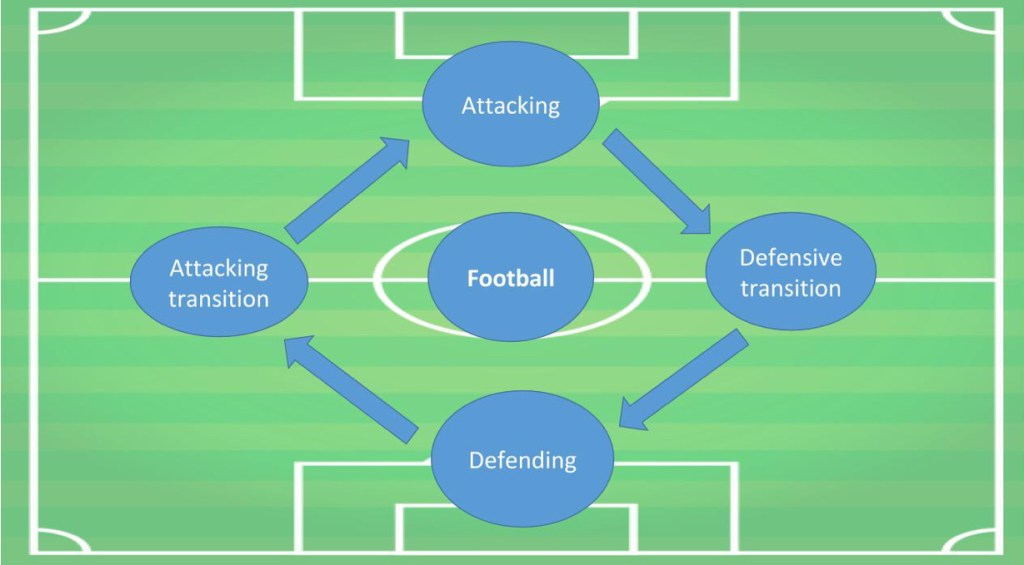
Good rest defence results in teams nullifying counter attacks through counter pressing and allows them to skip the defensive organisation phase of the game. Effective counter pressing is built on the foundations of well organized rest defence and as a result a team would now be able to use counter pressing as a playmaker due to the fact that they can win the ball high up the pitch whilst the opposition is disorganized and exploit valuable spaces.
Effective rest defence.
Amongst an array of other things, football is a game about space and because all four aspects of the game are interlinked, when attacking, teams need to be constantly thinking of ways to exploit space but must also think about defending the spaces around them if possession is lost. Teams with well organized rest defence tend to be vertically and horizontally compact, which increases the amount of connections between them when defending, as well as having very attentive players, who can evaluate the risk of the ball being lost and adjust their position accordingly. Due to the compact nature in the attacking phase, when the ball is lost, the distances between the now defending players will be shortened, allowing them to support each other when counter-pressing. The vertical and horizontal compactness can be seen below.
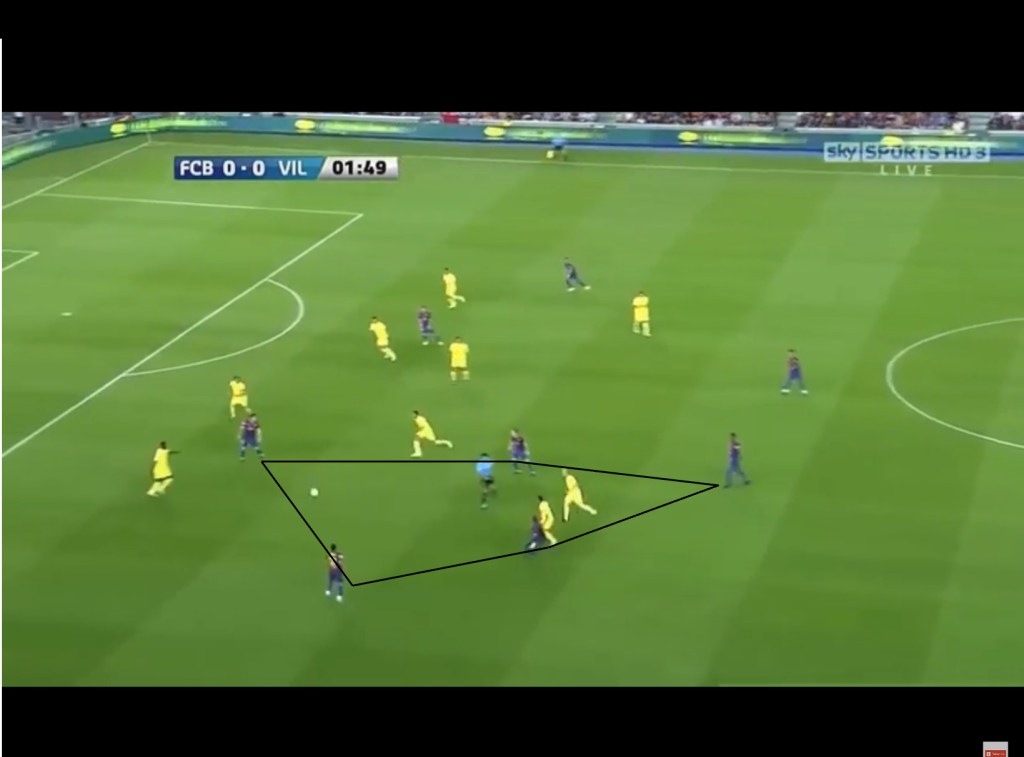
This can be further enhanced by aiming to achieve overloads (numerical superiorities) in certain areas of the pitch, which will help us both in the attacking and the defensive transition. In attack, numerical superiority will help progress the ball and overwhelm the opposition in certain areas and hopefully pull players out of position and help exploit spaces. But, creating overloads will also help with rest defence as it will firstly be easier for a team to be vertically and horizontally compact in certain areas and secondly, It will allow a team to have spacial control.By achieving spacial control through overloads, a team will be able to counter press much more effectively, as the short distances vertically and horizontally between the players allows for better covering of passing lanes forwards or into the midfield and allows a team to constrict the space around the opposition player. Through the overload, a team can control important spaces around them in the attacking phase of the game and most importantly in defensive transition.
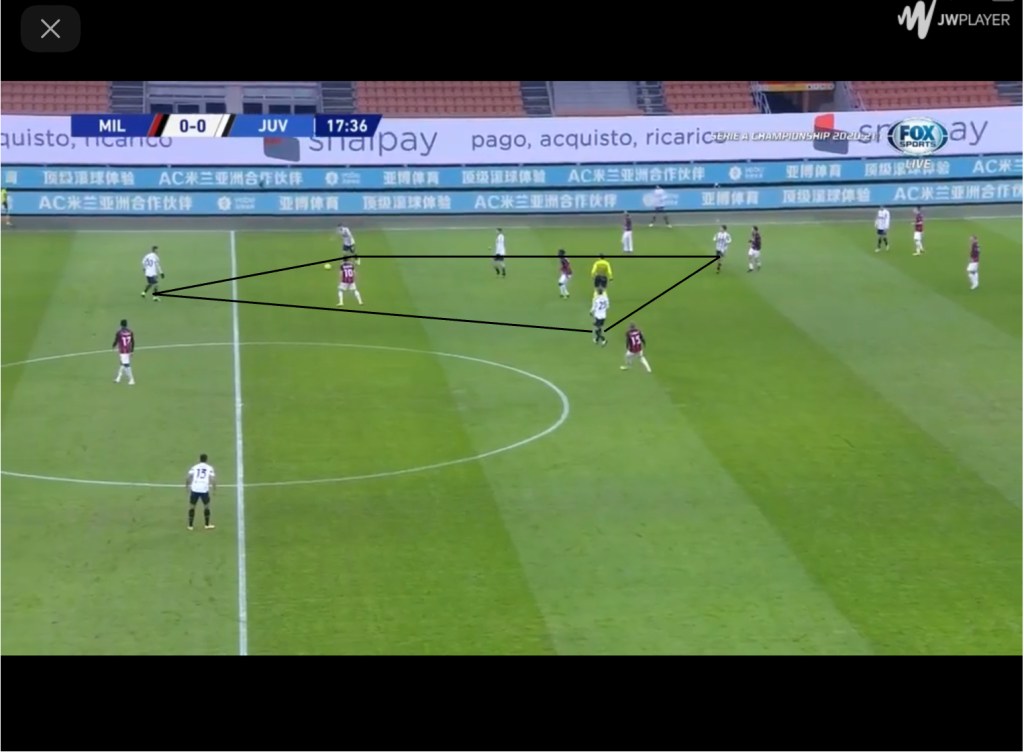
In the picture above, Juventus create an overload in the half space of the pitch and through this if they were to lose the ball to Kessie, the Milan midfielder, they would all be in good position to prevent forward passing options as well as pressing the ball carrier. This is because the players are vertically and horizontally compact and as a result of the overload can constrict the space around the Milan players due to their attainment of spatial control.
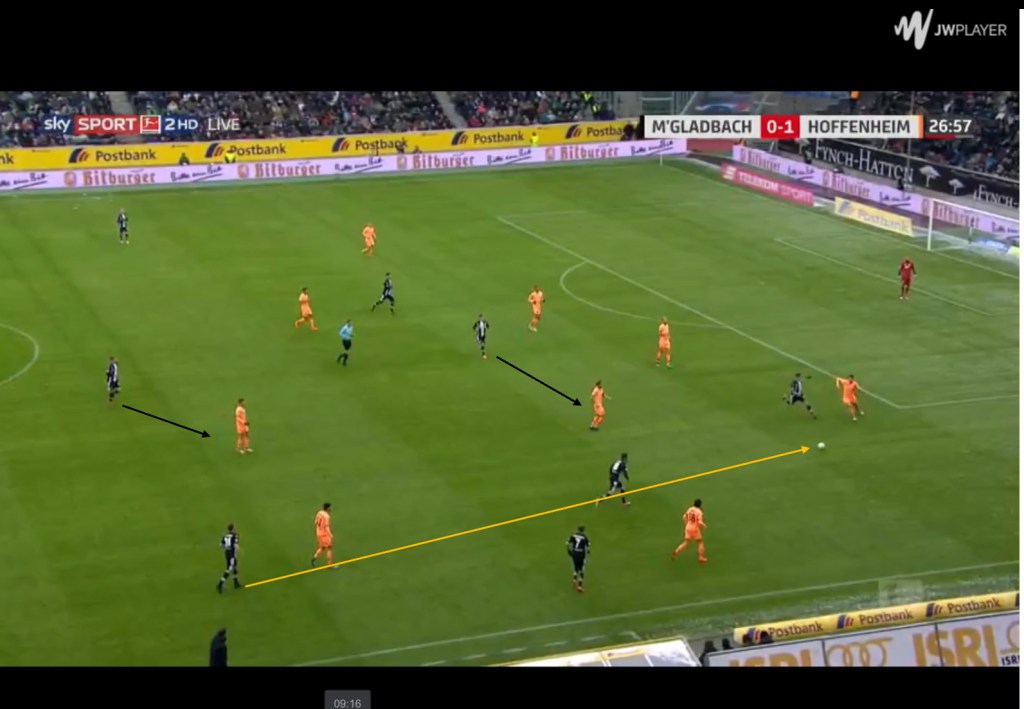
In this example, from Hoffenheim vs Gladbach in 2018, Gladbach have an overload on the wing as Jantschke plays a pass forward and although Gladbach are relatively compact vertically, they could be slightly more horizontally. Nevertheless, the distance between the players is still short enough to allow them to access the Hoffenheim players highlighted, when the ball is lost.
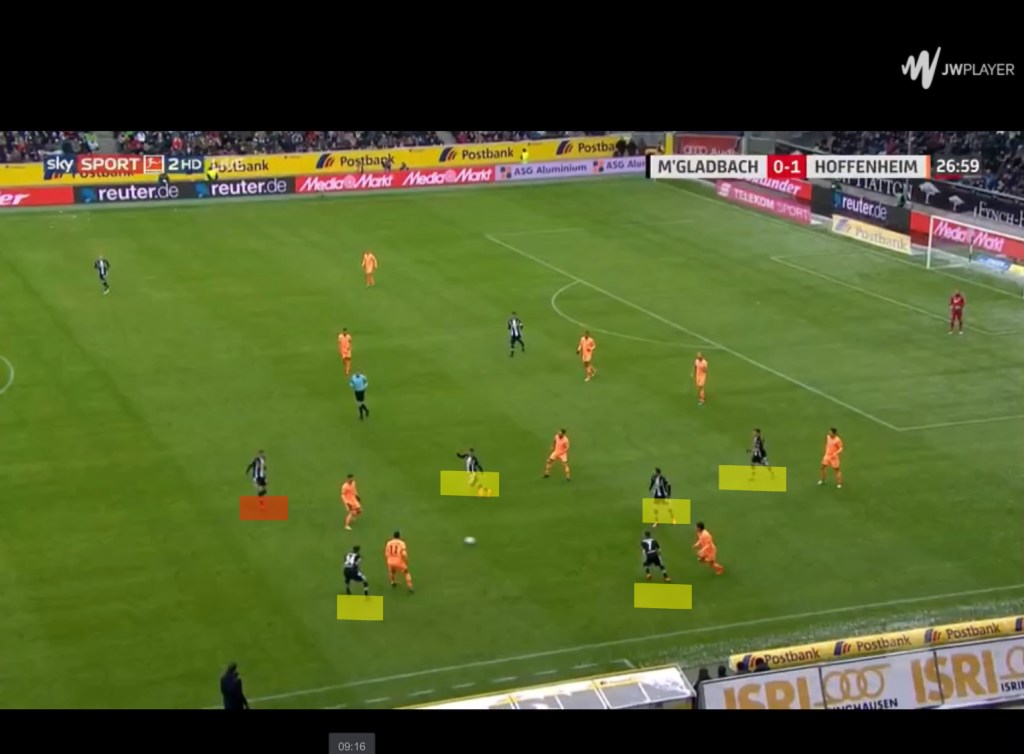
After the ball is lost the Gladbach players are able to close down the opposition and block passing options into the midfield and Jantshcke (the right centre back) marks Hoffenheim’s number 11, Amiri, tightly from behind . Cuisance(highlighted in red), however, should have marked Kramaric more tightly from behind forcing him to pass the ball backwards and because he didn’t, Kramaric managed to play the ball into the midfield. This shows that although initial rest defence can be good, in order to stop counter attacks or even win back the ball, the counter pressing of a side also has to be excellent.
What is bad rest defence
I have gone over what good rest defence is and shown examples of what it looks like and how overloads and other factors can help achieve this but it is also important to look at instances where a team’s rest defence can be improved upon.
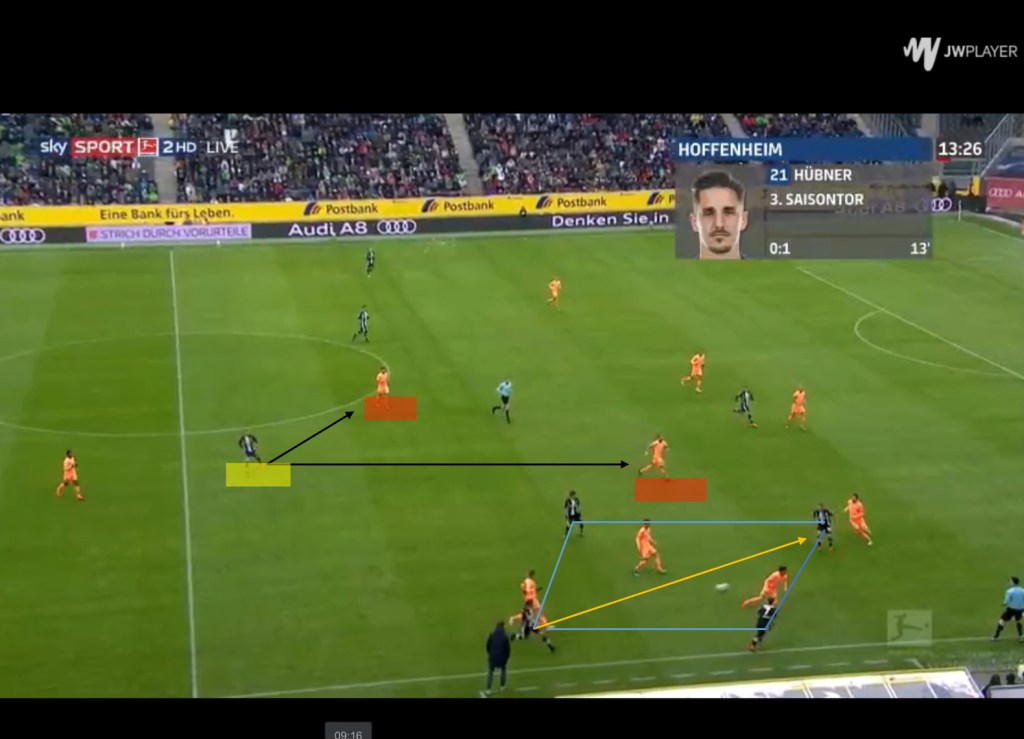
The picture above shows the importance of compactness, as although there are 4 Gladbach players close to each other in the area, Hoffenheim have an extra man with 5. Unlike the previous example where Cuisance’s access distance was close enough to press the nearby Hoffenheim players, this time he is too far.
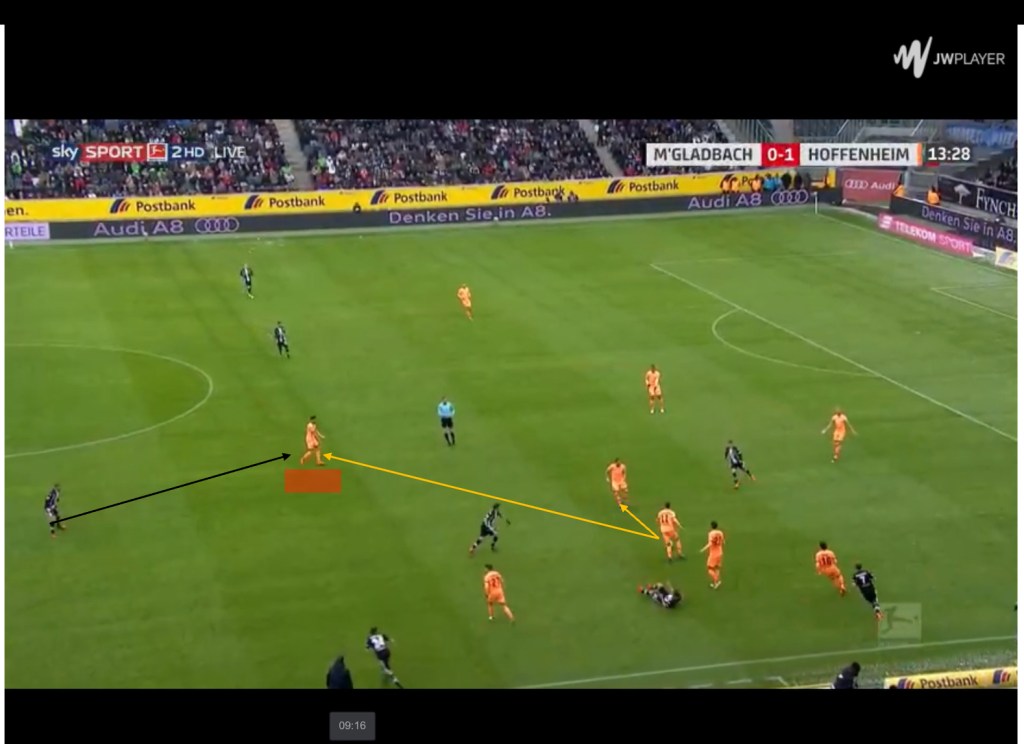
As a result of Gladbach’s numerical inferiority, Hoffenheim can play the ball out easily and due to Cuisance’s poor positioning, Hoffenheim can play an easy pass forward to a player in space.
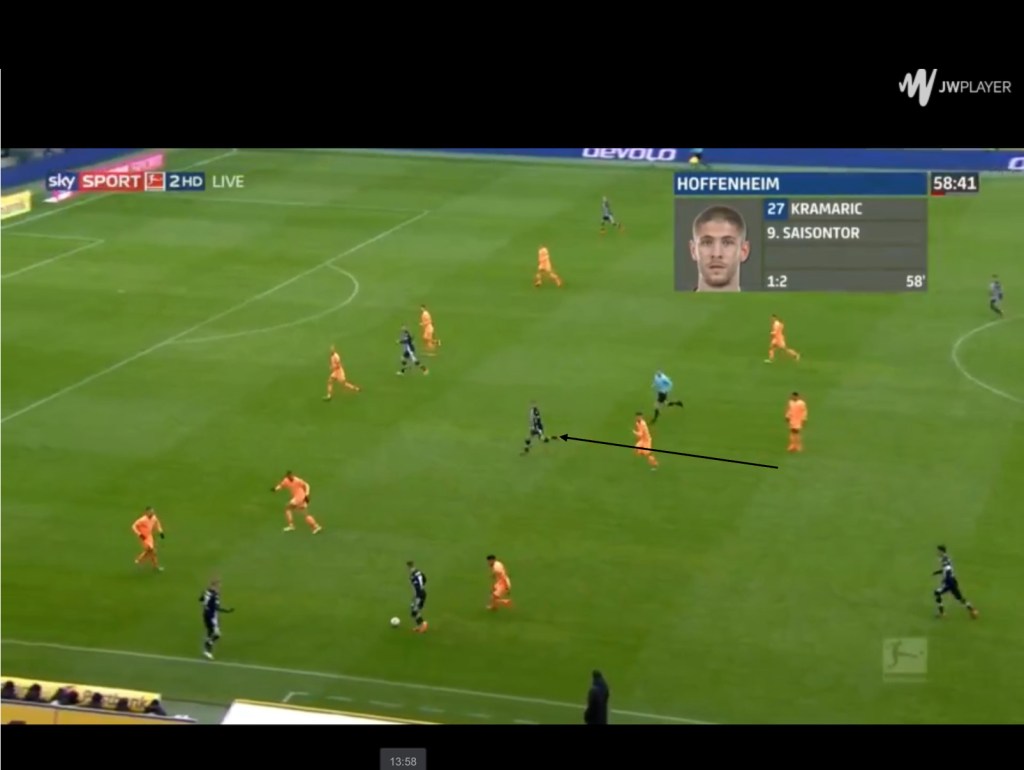
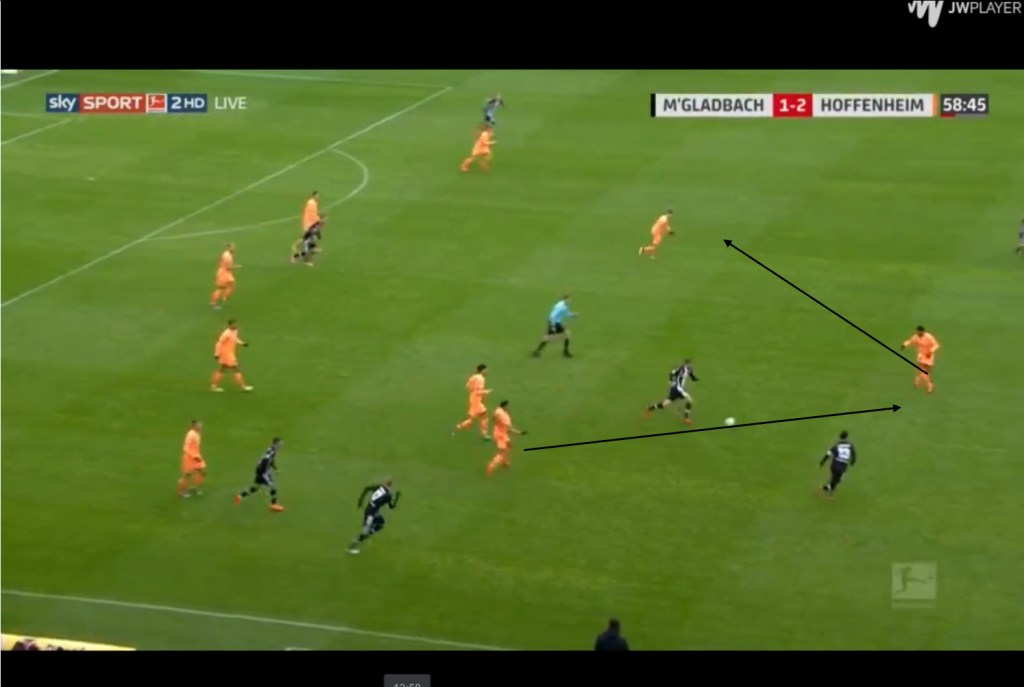
This is another example from the same game, where Cuisance plays a pass to the wing before darting forwards. This leaves a large amount of space in the midfield behind him and the large distances between the Gladbach players resulted in no vertical or horizontal compactness, meaning that once the ball was lost, they could not counter press at all and Hoffenheim could exploit the spaces easily. This is shown below.
Preparation while in possession
When watching football there may be moments where a player will have an option of playing a relatively risky forward pass but will decide to play the ball backwards and recycle possession. This is because a player may have evaluated the risk of playing the pass and realized that if the ball had been lost, their team would not have been in a favorable position to counter press and either stop the counter or win the ball back. This falls in line with what Pep Guardiola said about it taking at least 15 passes for his players to be in the optimum positions to start the attack, for the purpose of exploiting spaces as well as defending them.
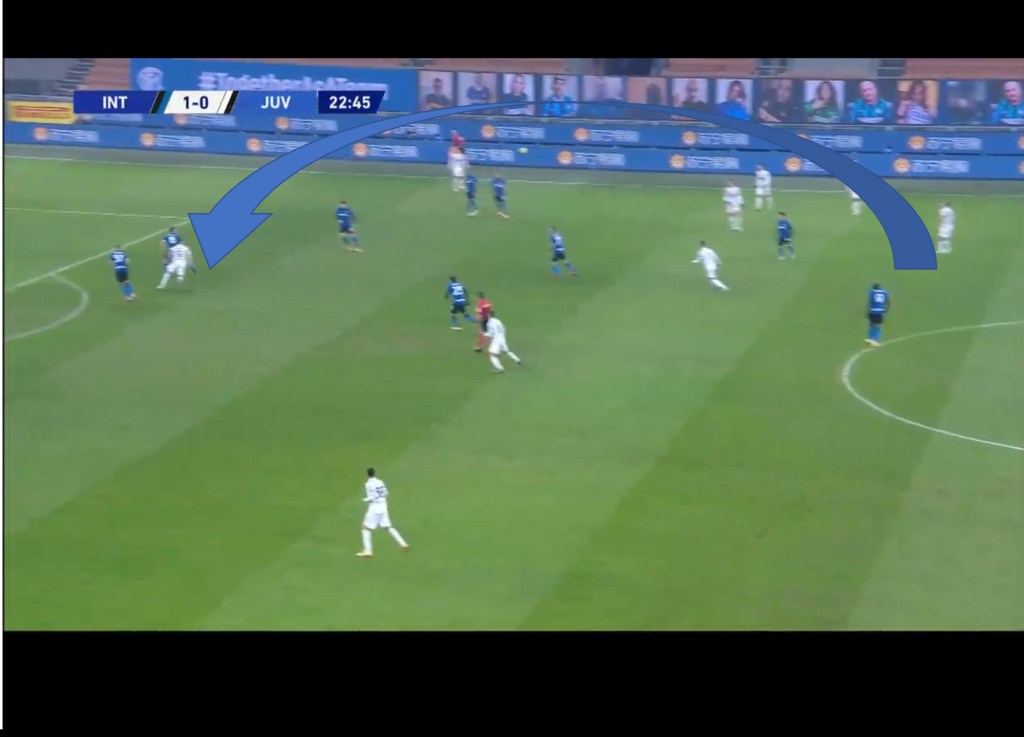
The example above is from Inter vs Juventus, a game which occurred recently at the time of writing. Bonucci played a lofted ball to Morata but he did so when Morata had no real options and when the Juventus midfielders were all clustered on the right hand side, leaving a large space in the midfield, behind Ramsey and Ronaldo.
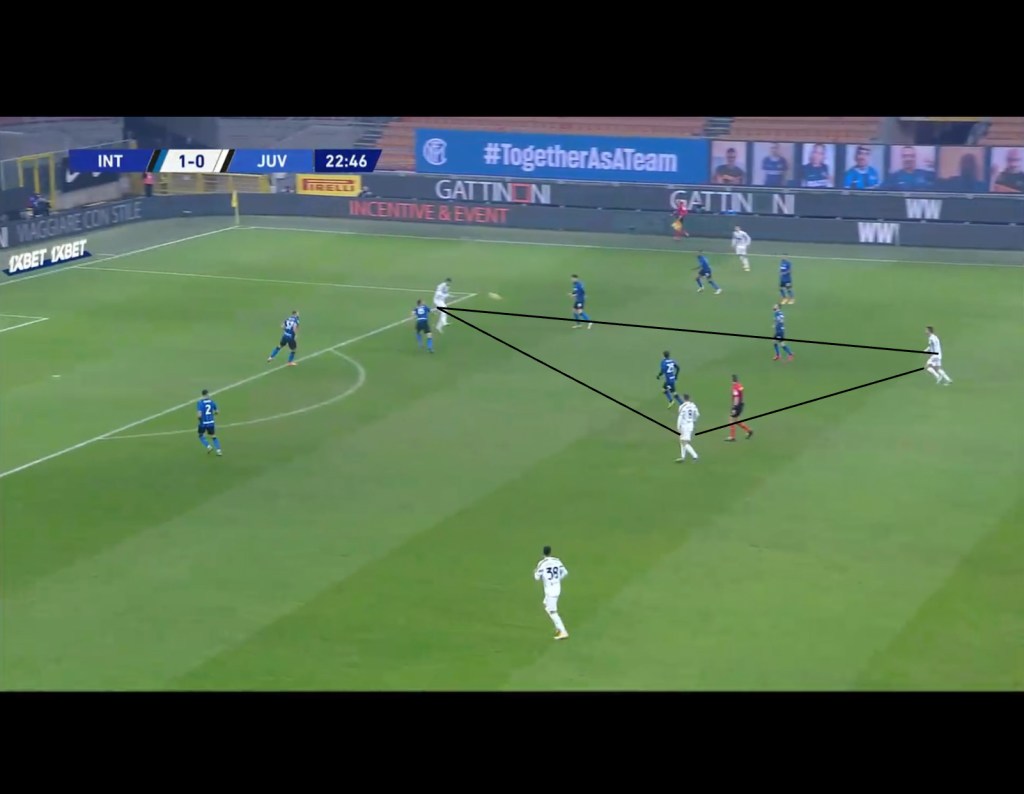
Once the ball is lost, Ronaldo does his best to apply pressure but he is outnumbered in the area and the distance between the Juve players is too large
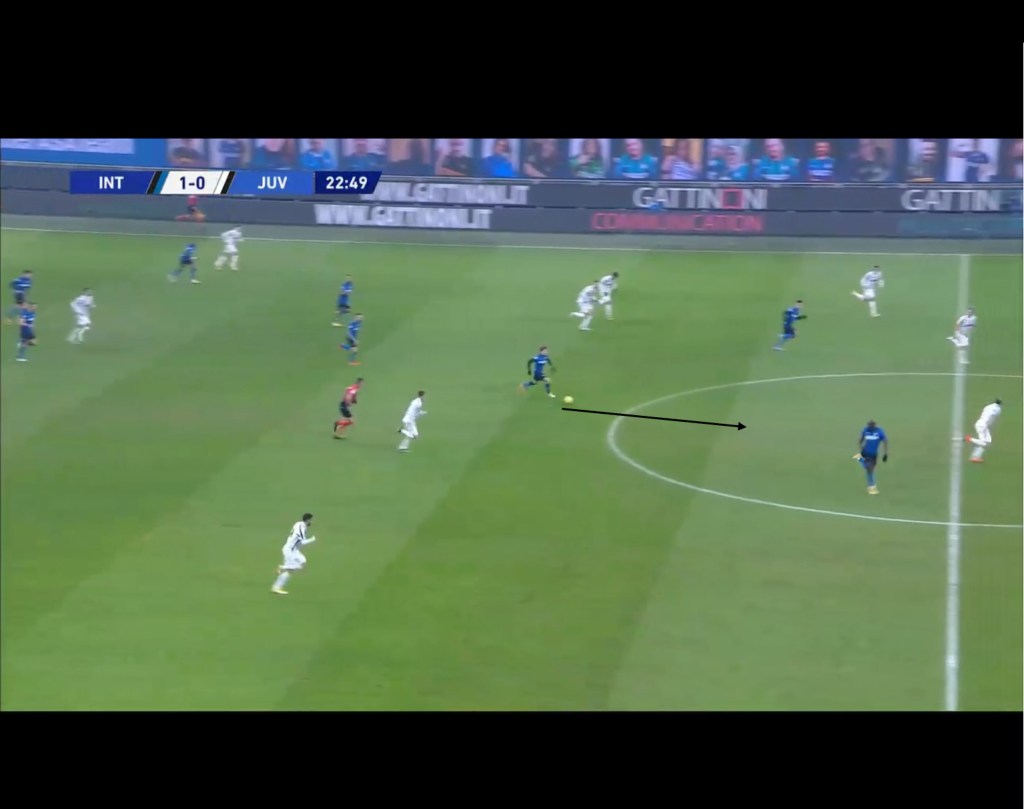
As a result Barella has acres of space to run into. Bonucci rushed the pass into Morata with his teammates out of position for such an attack and as a result, Inter were able to counter attack and get two very good shooting opportunities.
Conclusion
Rest defence is a very important aspect of the game, as it lays the foundations for effective counter pressing as well as reducing a teams vulnerability on the counter. It shows how the game phases cannot be separated and how the ideas of attack and defence are inextricably interlinked. With well organized rest defence, a team will be able to gain control of the defensive transitional side of the game.
feature photo credit: Getty images



 Skmm-ftbl
Leave a comment