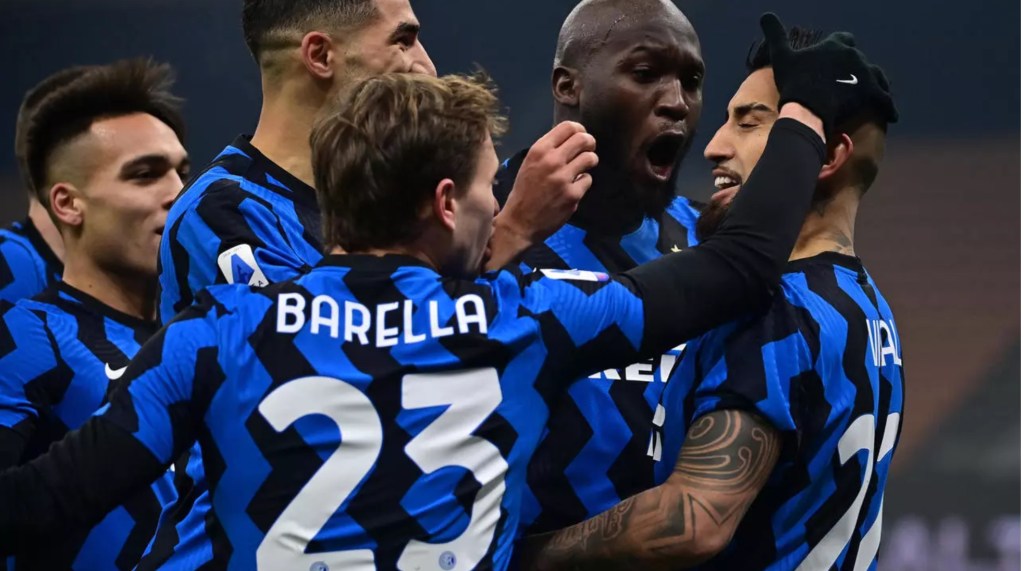
Tactical analysis: Inter Milan vs Juventus
This past Sunday football fans were treated the first Derby D’italia of this season, which saw an in form Juventus side, just off a crucial win against AC, face an Inter side that had dropped points in two of their last games. A result for Juve would have seen them go just four points behind AC Milan at the top of the table and just one point behind Inter. The plot thickened further as this was the first meeting between Pirlo and Conte, with the former having played a crucial role in Conte’s serial title winning Juventus side, which kicked off Juve’s dominance in the division over the last decade.
Line ups
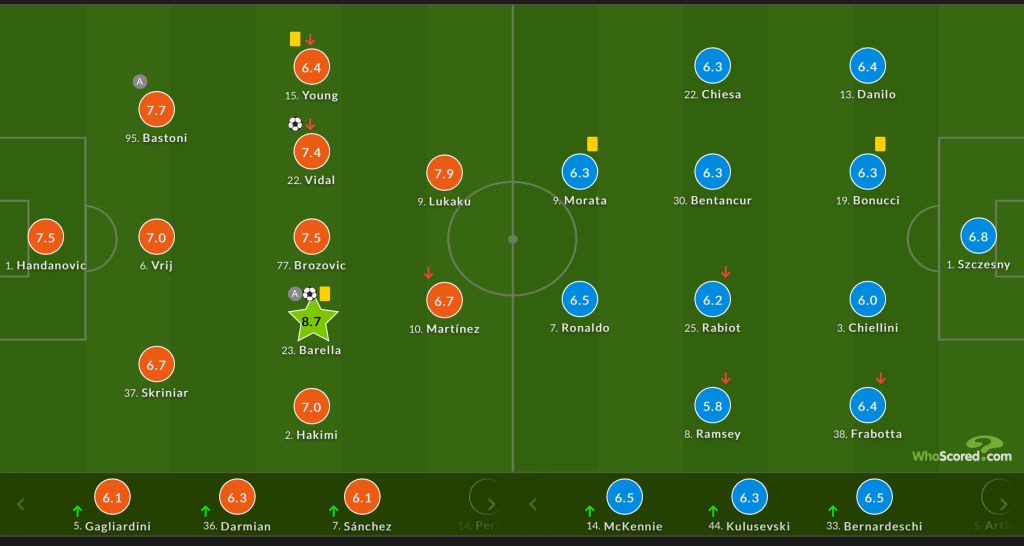
Juventus lined up in their typical 4-4-2 formation, with the most notable omission from the squad being Paulo Dybala, replaced by Morata, who was out due to injury. Inter on the other hand lined up in a 3-5-2 formation with a relatively full strength team although some eyebrows were raised when Vidal showed up on the team sheet.
Juve’s attack stifled by Inter
Juventus did not keep their 4-4-2 formation when attacking and attacked in their routine fashion. Ramsey pushed into the midfield, Frabotta moved upwards keeping the width on the left a hand side, Danilo stayed back to form a back 3, Rabiot moved to the right to collect the ball whilst Bentancur stayed in the pivot in front of the defence. Chiesa stayed on the right touch line keeping the width, whilst Ronaldo and Morata formed the front two pairing, with Ronaldo occasionally coming out wide to receive the ball. Conte’s side set themselves up in a 5-3-2, which managed to keep Juve at bay for the 90 minutes.

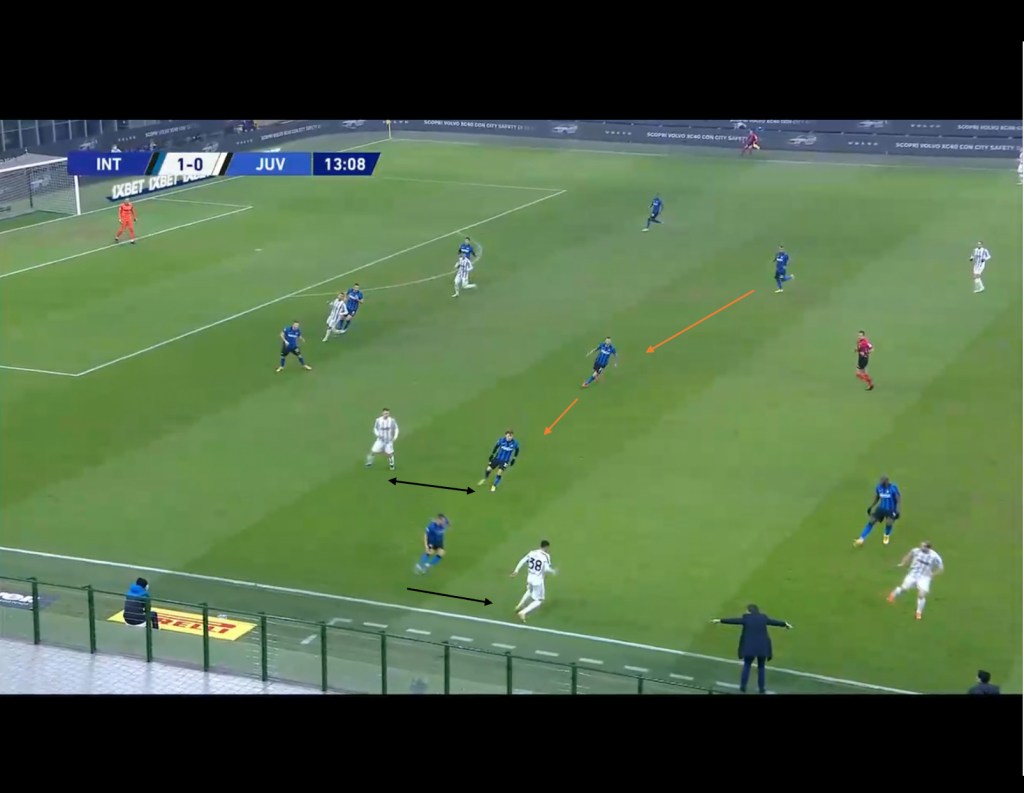
Inter’s mid-block dealt with Juve’s attack perfectly using a mixture of position oriented marking, man oriented marking and some cases of good ol’ fashioned man marking. Passes into Bentancur were restricted due to Brozovic orienting himself close to the midfielder when the Juve defence had the ball, preventing passes into him, as seen above. Juve were content to play the ball out wide to the right hand side, where they attempted to create overloads with Danilo, Rabiot, Chiesa and one of the two strikers dropping deep. However, Inter’s 5-3-2 meant that they could orient themselves towards Juve’s attackers preventing them from gaining numerical superiority on the flanks. Lautaro Martinez would then drop back preventing Bentancur from receiving the ball while Brozovic (number 77) would not orient himself towards any Juve attacker but rather the position of his teammates. This was to prevent passes through the middle to one of the Juventus’ strikers who have a tendancy to drop deep and combine with the midfielders. This was particularly important as it meant Juve were often forced backwards, preventing them from accessing the depth in their attack, or to the flanks where Inter were extremely comfortable defending. Bastoni would position himself close to Juventus’ depth options in certain zones and in some situations would man mark them for brief periods.
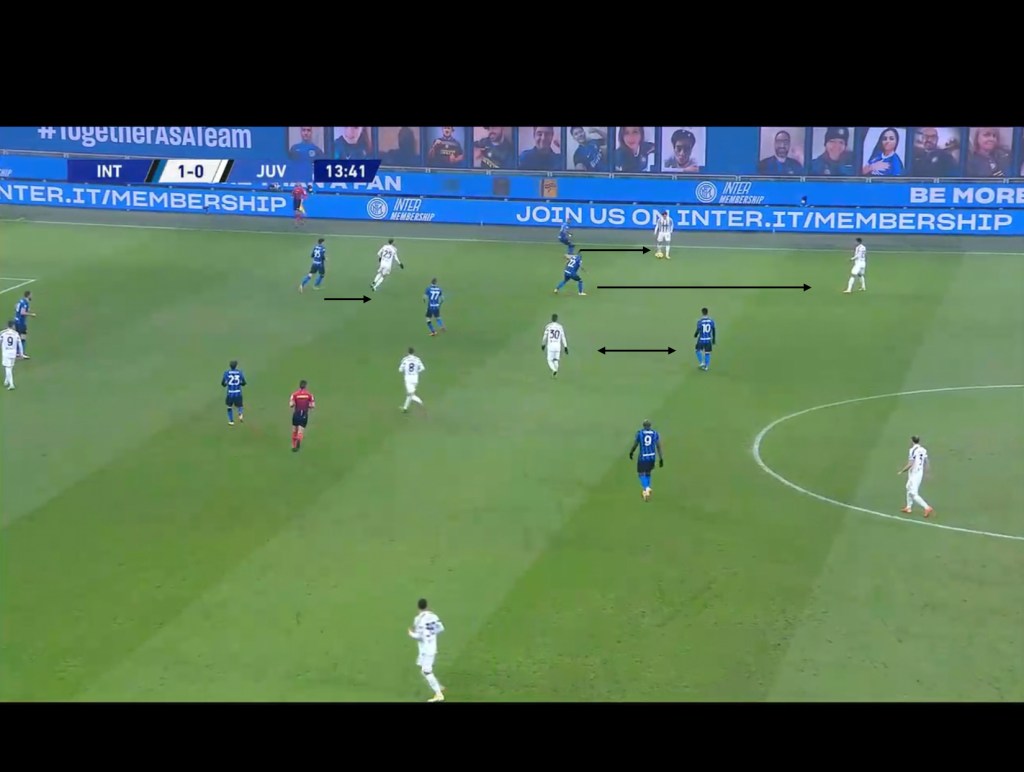
Below is an example showing how Juventus were crowded out on the right hand side with 2 attackers against 4 defenders.
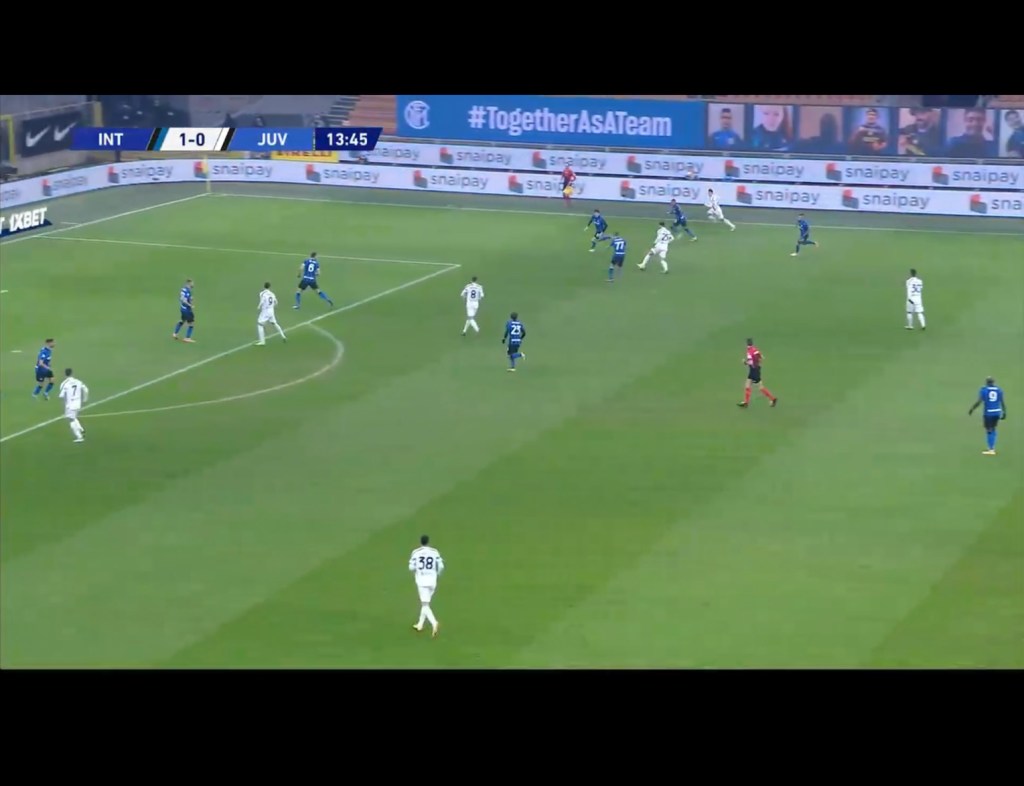
On the left hand side, Barella the right central midfielder oriented himself towards Ramsey whilst the rest of the defense would shift across, with Brozovic once again preventing passes through the centre, with Hakimi applying pressure to Frabotta when he received the ball forcing him to pass backwards. As a result Inter’s front two rarely pressed Juve’s back line aggressively, as they were quite content to allow them time on on the ball, especially after they took the lead.
Juve struggle to deal with Inter’s attack.
During build up, Inter focused most of their play down the right hand side and would play out with a back 3 with Skriniar and Bastoni pushing up when the ball was advanced further up field. Young and Hakimi would play as wing backs providing width, with Vidal and Brozovic playing as a double pivot while Barella drifted out wide operating between the touch line and half space. Martinez and Lukaku stayed high pinning back the Juve centre backs, with Lukaku also often drifting towards the right hand side to combine with Barella and Hakimi, when the ball had been advanced further up the pitch.
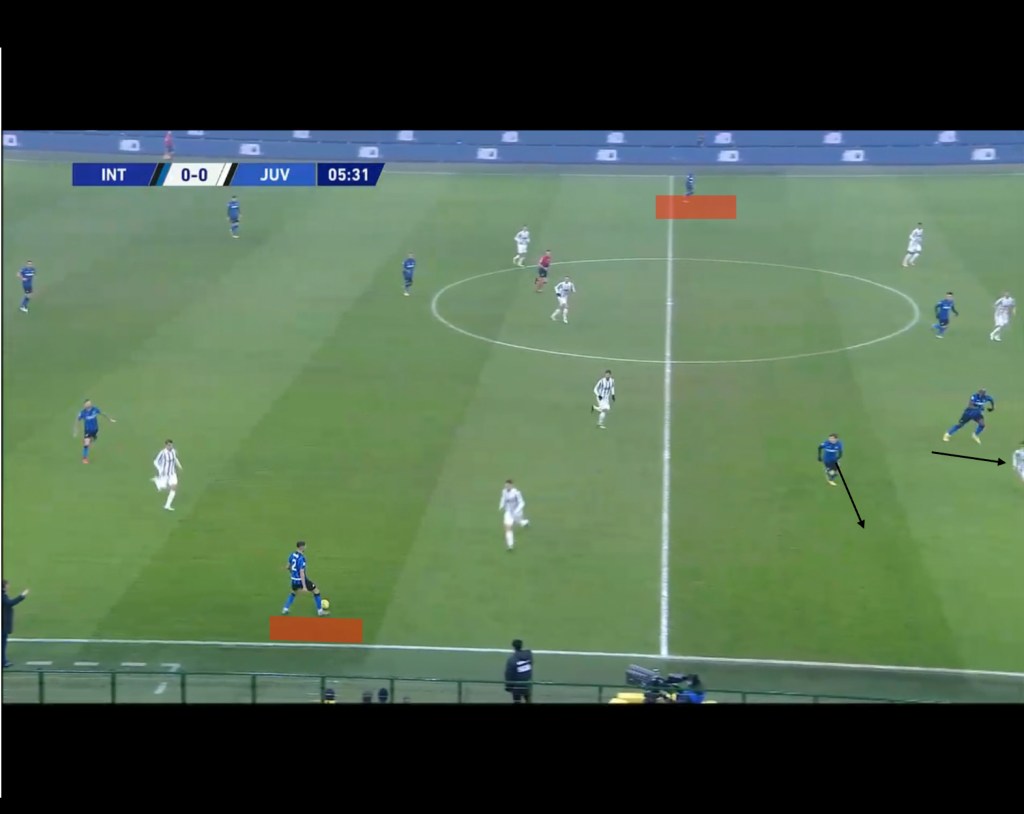
Juventus initially pressed in a 4-4-1-1, with Bonnucci and Chiellini man marking Lukaku and Martinez whilst either Bentancur or Ramsey (usually Ramsey) would press Skriniar when he received the ball with Morata initially marking Brozovic closely. Ronaldo would often stay on De Vrij, whilst Frabotta, who is not in frame just yet, would press Hakimi from behind.
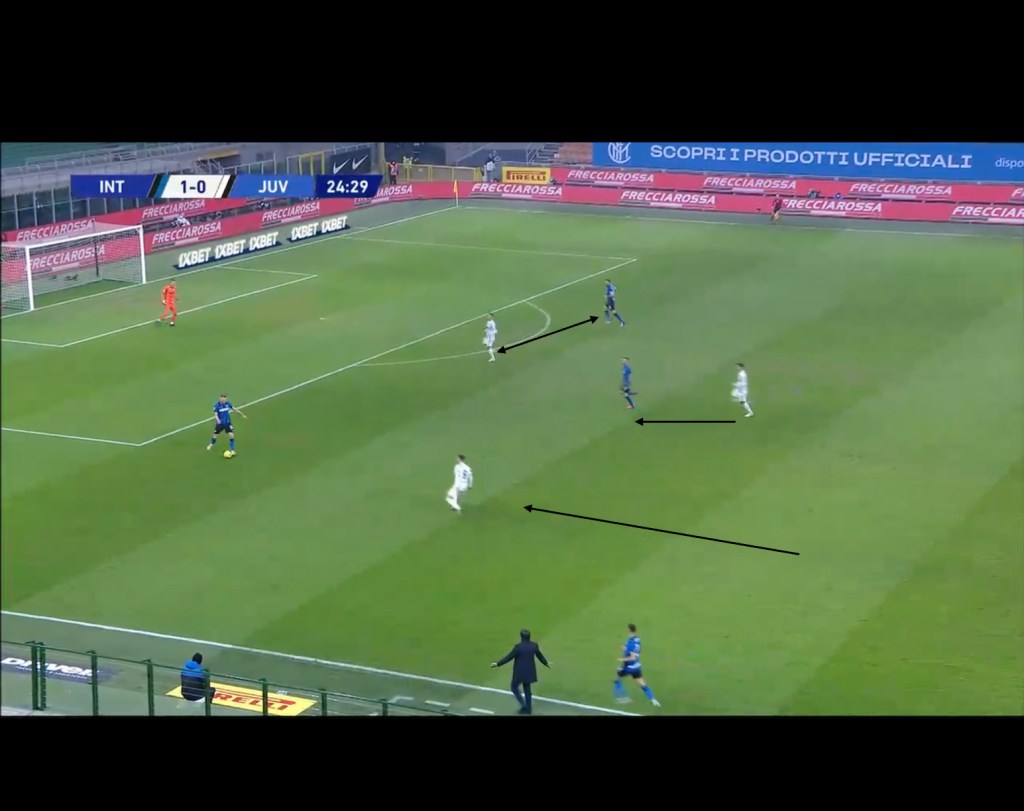
This approach was effective at times in the first half as it prevented Inter from playing out easily and would occasionally force them long. However, lapses in concentration from Morata when man marking Brozovic meant Brozovic was able to move away from him easily at times and receive passes unmarked. Juve’s marking system, with Ronaldo marking de Vrij and and Morata on Brozovic also meant that Bastoni was often in acres of space which could be exploited with a quick switch. Due to this, Juve switched from the 4-4-1-1 to a 4-4-2 with either Morata and Ronaldo marking de Vrij and Bastoni and Bentancur now orienting his position to press Brozovic

As seen below, Juve would then switch to a front 2 with Bentancur now tasked with pressing Brozovic.
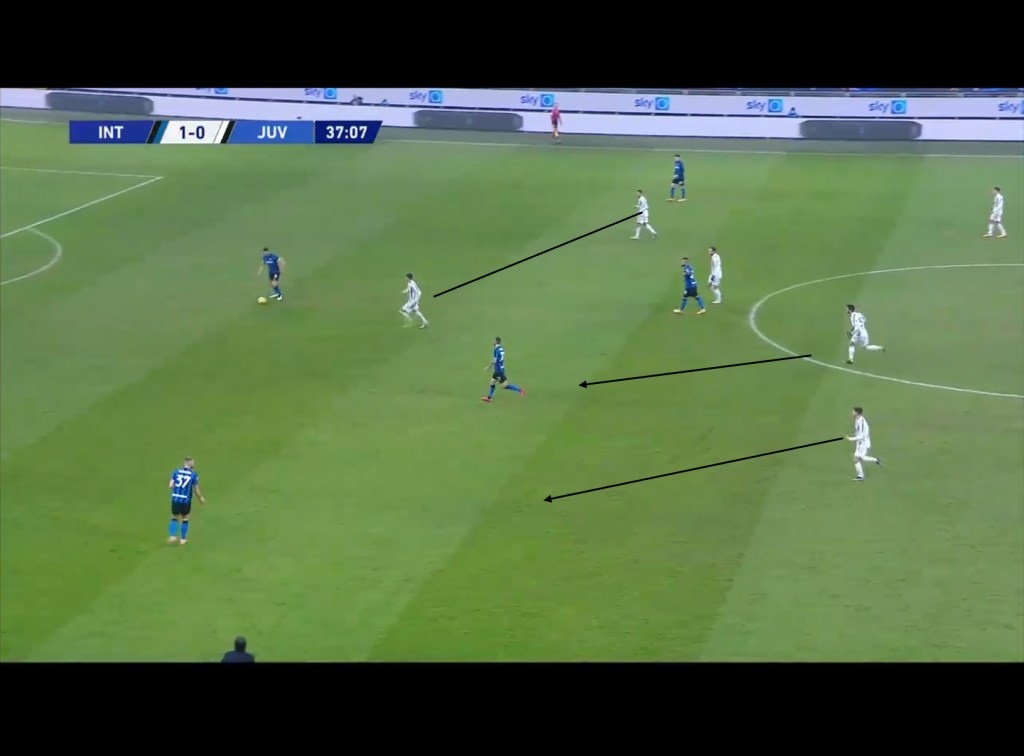
However, this tweak in the system actually caused Juventus more problems as it meant that It became easier for inter to create overloads on the right hand side. This meant that Bentancur was often faced with a dilemma because, if he oriented his position to press Brozovic, Barella was often left unmarked but if he man marked Barella, Brozovic had a plethora of time and space in the centre of the park.
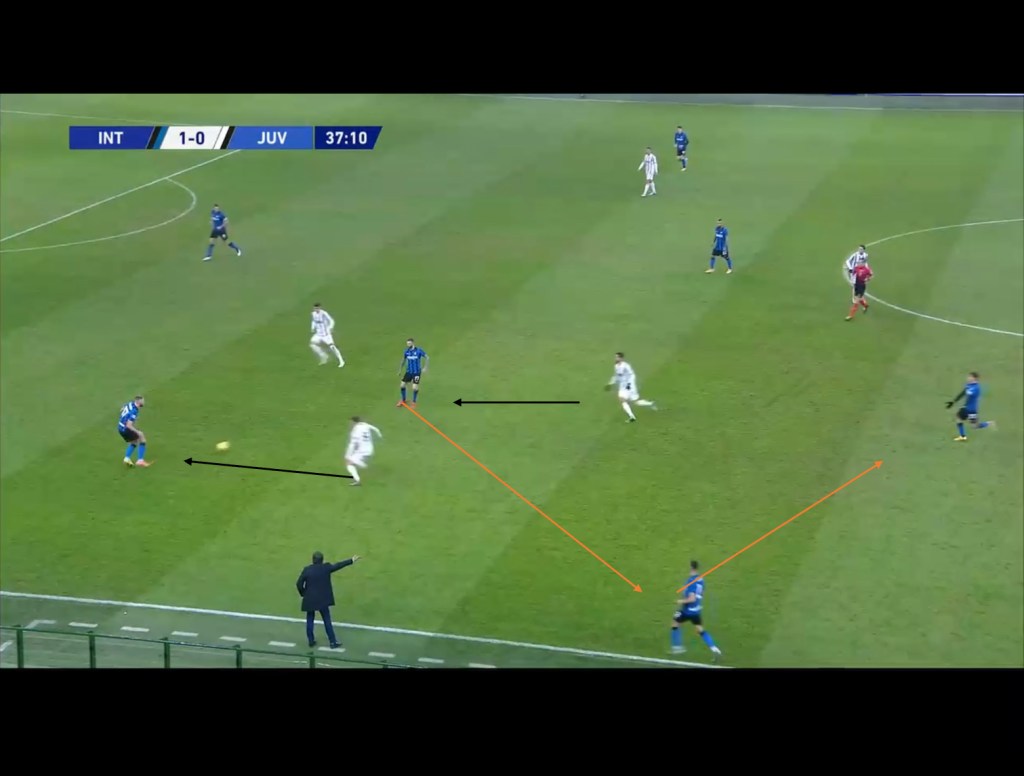
Below we see how by Bentancur marking Barella, Brozovic has time and space to receive the ball in the midfield.
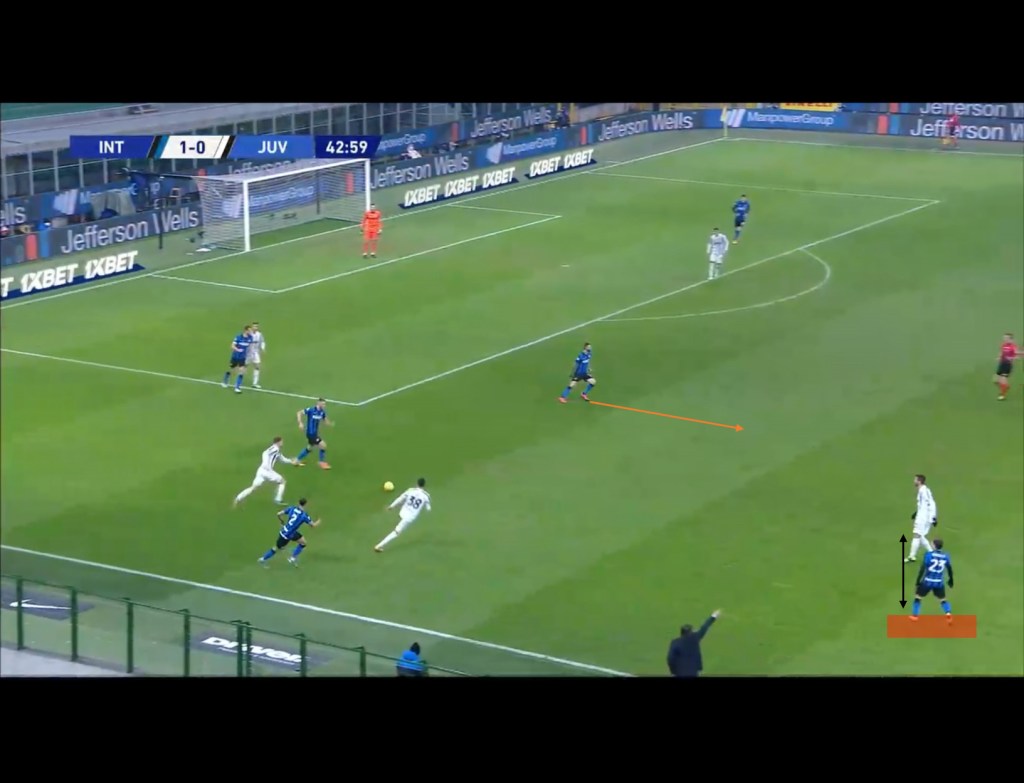
Below we can again see Bentancur’s conundrum, as pressing Brozovic meant leaving Barella free to receive the ball between the lines. Frabotta pressing Hakimi from behind also helped Inter, as it created space for Barella to receive the ball and run into.
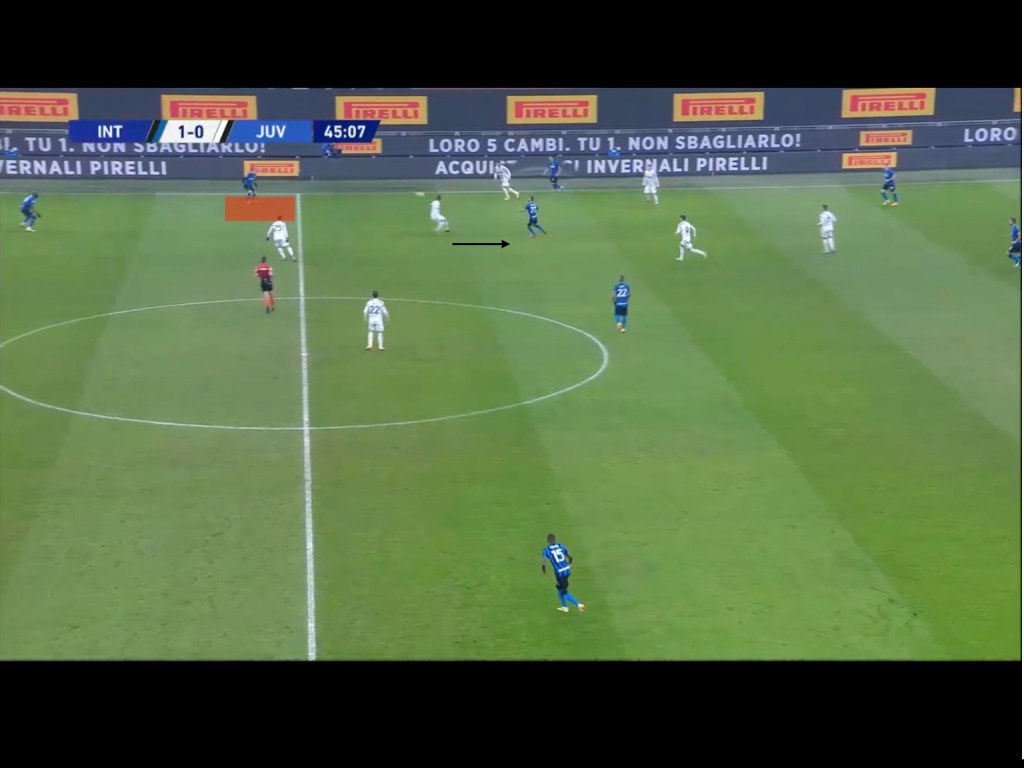
Conclusion
Overall, it proved to be a fairly comfortable win for Inter, as they managed to keep Juve at arms length, restricting them to taking shots from distance, before launching quick counter-attacks,which after their goal was their main method of chance creation. The Xg also supports this view as Inter had an Xg of 1.41 to Juve’s 0.43. This result means Inter stay in touching distance of the league leaders AC Milan, with only 3 points separating the sides. However, for Juve, the gap between them and the Rosaneri increased to 10 points as they stay in 5th. Nevertheless Juventus has enough quality and experience to remain in the hunt for the Scudetto until the end of the season. It is not certain who will be top of the table at the end of the season but it is certain that we shall be treated to one of the most exciting Serie A title races in a while, with 12 points separating 1st and 7th.
feature photo credit: Miguel Medina AFP



 Skmm-ftbl
Leave a comment